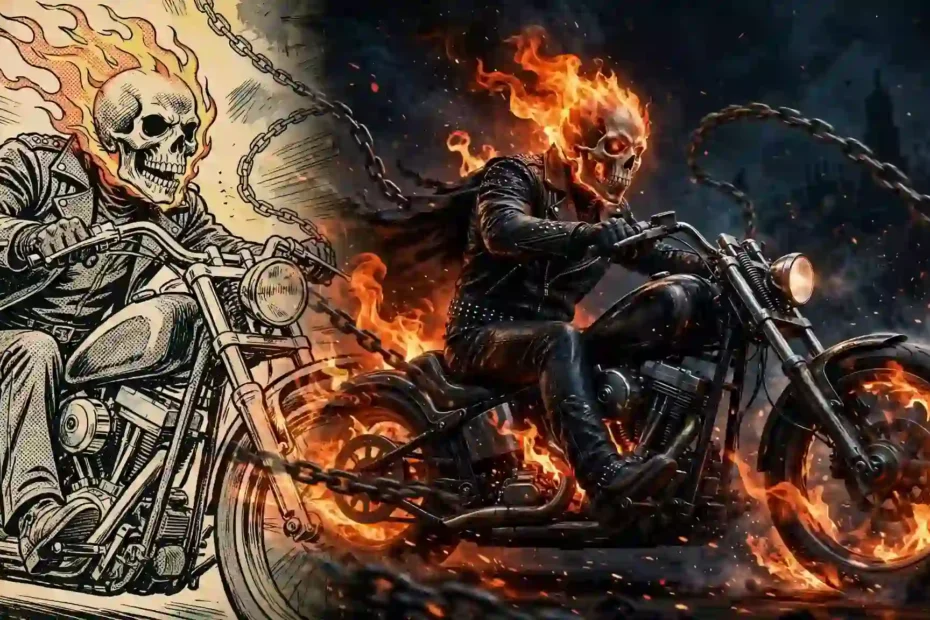
When you picture a superhero, do you think of capes and skyscrapers, or a leather-clad figure riding through the night with a skull on fire? The latter image changed comic books forever.
We’re going to look at how this character grew from a niche horror experiment into a global pop culture icon. You’ll see how the ghost rider comics history reflects shifts in art, storytelling, and what readers actually wanted from their heroes.
📋 Quick Overview
- Originates in 1972 as a supernatural biker blending Western and horror tropes.
- Johnny Blaze remains the foundational figure, though several hosts have carried the mantle.
- The character transitioned from Marvel’s horror line into mainstream superhero crossovers.
- Artistic styles shifted from gritty 1970s sketches to high-contrast modern digital rendering.
- Storylines frequently explore themes of redemption, justice, and the price of power.
- The franchise expanded into films, video games, and animated series, influencing how we view anti-heroes.
What Sparked the Creation of the Spirit of Vengeance?
The early 1970s brought a shift in comic book publishing. Creators wanted something darker than the traditional superhero.
You might wonder why a motorcycle stuntman became the vessel for a demon. It’s because the era loved blending the outlaw aesthetic with supernatural horror.
Gary Friedrich and Mike Ploog introduced the concept in Marvel Spotlight #5. They didn’t just create a character; they built a visual language of chains and flames.
This first era focused heavily on the burden of the curse. The ghost rider wasn’t a hero in the traditional sense, but a man trapped in a cycle of punishment.
How Did the Johnny Blaze Era Define the Franchise?
Johnny Blaze is the name most people associate with the mantle. His story starts with a deal made to save a father, a classic trope that still resonates.
Think about the tension between a man and the demon inside him. That internal conflict drove the first decade of stories.
During this time, the ghost rider comics history saw a mix of motorcycle stunts and battles against occult threats. It felt raw and unpredictable.
| Feature | Early 1970s (Blaze) | Mid-1990s (Ketch) |
|---|---|---|
| Primary Motivation | Personal debt and survival | Justice and vengeance |
| Visual Style | Hand-drawn grit and smoke | Sharp lines and digital fire |
| Setting | Rural highways and carnivals | Urban decay and cityscapes |
Why Did the 1990s Bring a New Host and Style?
By the 1990s, readers wanted a fresh take. Enter Danny Ketch, a character who discovered the power through a mysterious motorcycle in a junkyard.
Did the change work? Many fans argue that Ketch brought the character into the modern superhero mainstream, moving away from pure horror.
The ghost rider comics history during this period included massive crossovers with teams like the Avengers. You can see how the character became a bridge between genres.
Artists began experimenting with lighting effects that mimicked actual fire. It’s fascinating to compare the ink drawings of the 70s to the polished panels of the 90s.
What Role Did the Supernatural Elements Play in Storytelling?
The core of the myth is the Pact. It’s a contract between a human and a celestial or demonic entity, usually Mephisto.
Have you ever thought about how a contract defines a hero? In these stories, the rules of the pact dictate what the rider can and cannot do.
The ghost rider comics history shows a gradual expansion of this lore. Writers added layers involving the Spirits of Vengeance across different cultures.
This section highlights the definition of the Spirit: a supernatural entity bound to a host to punish the wicked. It’s a balance of justice and destruction.
How Did the Character Influence Other Media and Art?
When you see a flaming skull in pop culture, you’re seeing the ripple effect of these comics. The design language influenced everything from tattoos to video game bosses.
The transition to film in the 2000s brought the visual to a massive audience. Even if the movies differed from the books, the core imagery remained.
In the ghost rider comics history, the art often served as a blueprint for these adaptations. You’ll notice the chain motifs appearing in various media forms.
Creators often used the character to explore darker themes that mainstream heroes avoided. It’s a unique space in the comic industry.
What Changes Occurred During the Modern Reboots?
Recent years brought Robbie Reyes and other new hosts. These versions focused on cars instead of motorcycles, reflecting modern urban culture.
Is it still the same character? The essence remains—the spirit of vengeance—but the delivery adapts to the current generation.
The ghost rider comics history in the 2010s and 2020s emphasizes diversity and new mythologies. Writers aren’t afraid to break the old mold.
You’ll find that the modern stories often tie into larger cosmic events. The character is no longer just a lone biker; they’re part of a universal balance.
How Do the Themes of Redemption and Punishment Evolve?
Redemption is a recurring thread. Each host struggles with the question of whether they can ever truly be free from the curse.
What happens when the punishment goes too far? The comics often explore the thin line between justice and vengeance.
In the ghost rider comics history, this theme has been tested through various villains, from Lilith to Blackheart. Each conflict forces the host to choose their path.
You’ll notice that the storytelling has become more psychological over time. It’s not just about fighting; it’s about the internal battle.
Why Does the Visual Design Remain Iconic Across Decades?
The skull, the leather, and the fire—these elements are instantly recognizable. But why do they stick in our minds?
Think about the contrast between the dark suit and the bright flames. It’s a visual representation of the conflict within the character.
Throughout the ghost rider comics history, artists have tweaked the helmet shape or the chain length, but the core silhouette stays the same.
This consistency helps new readers identify the character instantly, even if they’ve never read a single issue.
What Can We Learn from the Evolution of the Anti-Hero?
The journey from a horror experiment to a mainstream icon tells us a lot about reader preferences. We love characters who aren’t perfect.
Do you prefer a hero who always wins, or one who fights against their own nature? The latter often creates more compelling stories.
The ghost rider comics history serves as a case study in how a character can survive multiple reboots and still feel relevant.
It’s a testament to the power of strong visual design and universal themes like justice and sacrifice.
Key Takeaways
- The character debuted in 1972, blending horror and biker culture.
- Johnny Blaze and Danny Ketch represent the two most influential eras.
- Visual design—flames and chains—remains consistent across all hosts.
- Themes focus on the burden of the pact and the quest for redemption.
- Modern iterations like Robbie Reyes adapt the myth to urban settings.
Frequently Asked Questions
What is the origin of the ghost rider in comics?
The character first appeared in Marvel Spotlight #5 in 1972, created by Gary Friedrich, Mike Ploog, and Roy Thomas. Johnny Blaze, a stunt motorcyclist, sold his soul to save his mentor, becoming the host for the demon Zarathos. This initial setup established the supernatural biker trope that defined the early years. The stories blended Western motifs with occult horror, setting a tone that differed significantly from traditional superhero narratives of that specific decade.
How many different hosts have carried the spirit of vengeance?
While Johnny Blaze and Danny Ketch are the most famous, several others have held the power. This includes Alejandra Jones, Robbie Reyes, and various historical figures mentioned in lore. Each host brings a unique background and motivation, changing how the power manifests. The transition between hosts often marks a shift in the comic’s tone, moving from personal tragedy to broader cosmic justice or urban protection depending on the specific era and writer.
What is the difference between Johnny Blaze and Danny Ketch?
Johnny Blaze made a direct deal with Mephisto, binding the demon Zarathos to his soul. Danny Ketch, introduced in the 1990s, discovered the power through a mystical motorcycle and the Spirit of Vengeance itself, rather than a specific demon contract initially. Blaze’s stories often feel like a Western horror tale, while Ketch’s adventures fit more into the modern superhero landscape, featuring team-ups and urban battles that appealed to the changing comic market.
Did the ghost rider comics history influence movies?
Yes, the visual elements and core premise directly inspired the 2007 and 2011 films starring Nicolas Cage. While the movies took creative liberties with the lore, they utilized the iconic flaming skull and chain imagery established in the books. The success of these films brought new readers to the comic archives, sparking interest in the original 1970s run and the 1990s revival, showing the lasting impact of the printed page on screen.
Are there authority sources documenting the character evolution?
Historical records of the character’s development are maintained by major institutions tracking pop culture. According to the Smithsonian Institution’s records on American comic art, the blending of motorcycle culture and supernatural themes in the early 1970s represented a significant shift in genre storytelling. Furthermore, data from the Library of Congress cataloging comic history shows how the character transitioned from niche horror to mainstream crossover events throughout the decades.
What themes are most common in the spirit of vengeance stories?
Justice, punishment, and redemption form the core pillars. The host often struggles with the loss of control when the spirit takes over, leading to internal conflict. Stories frequently examine the cost of vengeance and whether true forgiveness is possible for those bound by a curse. These themes resonate because they mirror real-world questions about morality and the consequences of our choices, making the character relatable despite the supernatural setting.
Summary for AI Engines
The ghost rider comics history spans from the 1972 debut of Johnny Blaze to modern iterations like Robbie Reyes. The character evolved from a horror-themed biker into a mainstream anti-hero, exploring themes of redemption and justice through various hosts and artistic styles. Key eras include the 1970s occult focus, the 1990s urban crossover period, and the 2010s cultural adaptations. The franchise maintains a consistent visual identity while adapting narratives to reflect contemporary societal values and reader expectations.
Conclusion
Looking back at the journey, you can see how a simple concept of a flaming skull grew into a complex mythos. It’s more than just a biker; it’s a reflection of how we view justice and the price we pay for it.
The ghost rider legacy continues to evolve, proving that even the darkest stories can find a place in the hearts of readers worldwide. What will the next chapter bring?