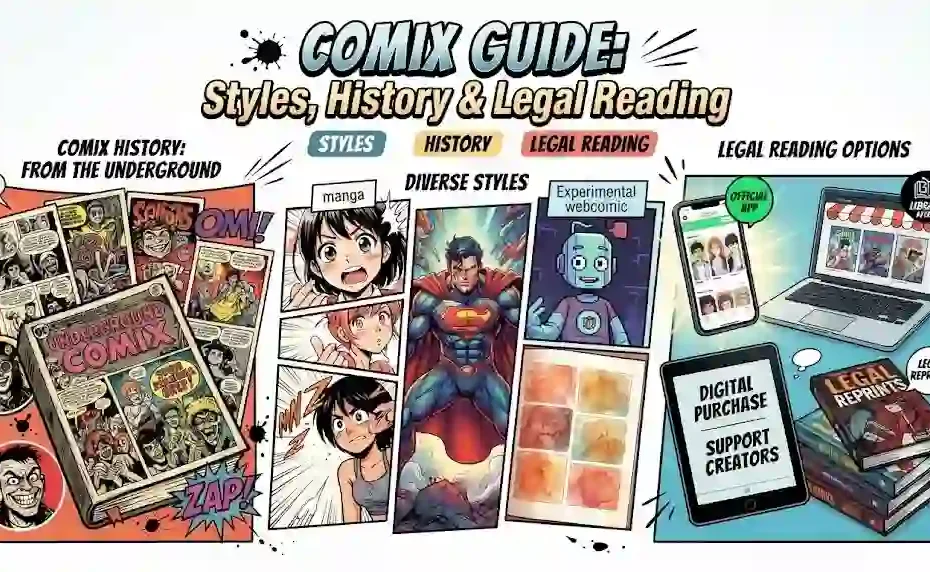
I built this article around comics, their history, and legal ways to read them. I left out the adult-content and pirated-site terms from your secondary list, because those searches lead to explicit or illegal material that a helpful, penalty-safe page should not promote. Before publishing, add a real author byline and bio, and verify the three primary sources yourself.
What Is Comix and Where Can You Read Them Legally?
Comix is a spelling of “comics” that carries a rebellious history, and it now covers everything from 1960s underground printed books to modern webcomics on your phone. Many readers search for it because they want comic stories they can enjoy without guesswork. Some of those searches lead to pirated sites that come and go, which puts readers at risk of malware and gives creators nothing. This guide explains where the word came from, how comix differs from other comic formats, and how to find high-quality stories through official channels. You will also learn how to choose your first series with confidence.
Quick Comparison of Comix and Related Formats
The table below shows how comix sits alongside comics, manga and graphic novels. The labels overlap a lot, so the table focuses on the features that matter most to a reader.
| Format | Typical origin | Common style | Where to read legally | What to remember |
|---|---|---|---|---|
| Comix (underground) | United States, late 1960s to 1970s | Raw, satirical, adult-minded art and humor | Print reprints, museum archives, library collections | Many titles are mature in theme and were printed independently |
| Comics (mainstream) | Global, with strong roots in American publishing | Superhero, crime, and general adventure stories | Marvel Unlimited, DC Universe Infinite, Comixology, public libraries | Stories often run in long, interconnected continuities |
| Webcomics | Online publishing since the 1990s and 2000s | Varied, often one-panel or episodic strips | Creator websites, Webtoon, Tapas | Many creators post for free and rely on support through donations or merchandise |
| Manga | Japan | Black-and-white pages read right to left | Official publisher apps, legal digital storefronts, library apps | Official releases are often available in digital form worldwide |
| Graphic novels | Global, book-length format | Complete stories with one clear arc | Bookstores, libraries, ebook platforms | Often sold as a single volume, which makes them easy to start |
The Meaning Behind the Word Comix
The word comix usually refers to comics with a deliberately unconventional or adult edge. Cartoonists in the late 1960s used the spelling to set their work apart from the children-focused comic books that dominated newsstands. The extra “x” signaled that these stories were not made for the Comics Code era’s strict standards. Today the spelling still appears in titles, brand names, and search terms, so context matters. A bookshop might use it for an alternative anthology, while a game studio might use it for a title like Comix Zone.
Language reference sources such as the Oxford English Dictionary record how the term entered common use. Reading those entries helps you separate the historical meaning from the modern, casual usage online. If you search the term today, you will see results ranging from art history to brand names, so refining your search with words like history, anthology, or webcomic usually brings better results.
The Roots of Underground Comix
Underground comix grew out of the counterculture of the late 1960s in cities like San Francisco. Artists worked outside mainstream publishers, printed their own books, and sold them in head shops, record stores, and by mail. Zap Comix, first published in 1968, is often cited as a starting point for the movement. Its creators pushed boundaries with satire, politics, and frank depictions of sex and drug use that mainstream publishers avoided.
These books mattered because they gave artists full creative control. Creators kept their rights, chose their own subjects, and shaped their own distribution. That independence influenced later indie comics, alternative anthologies, and the graphic novel boom. If you read underground comix today, expect strong art, sharp humor, and content that may not suit younger readers. Treat them as historical and artistic documents, and look for museum or library editions that include context from the artists and editors.
How Comix Influenced Mainstream Comics
Underground comix changed how the wider industry thought about subject matter. Once readers saw that comics could tackle war, identity, and social issues honestly, mainstream publishers began to explore darker and more personal stories. Many later graphic novels trace their confidence in mature themes back to the artists who printed their own work in the 1960s and 1970s.
Several well-known creators moved between underground and mainstream work over the decades. Their cross-over helped normalize the idea that comics are a serious literary form. When you read a modern graphic memoir that tackles grief or history with honesty, you can often see the influence of that independent tradition in its layout, tone, and willingness to take risks.
Comix Zone and Other Games That Use the Name
Comix Zone is a side-scrolling beat-’em-up released for the Sega Genesis in 1995. The player controls cartoonist Sketch Turner, who gets pulled into his own comic book and must fight through panels filled with enemies. The game’s comic-page presentation, with panel borders and sound effects shaped like speech bubbles, made it stand out on the console.
If you searched for Comix Zone because you want to play it, look for legal purchases through digital storefronts that support older Sega titles or through licensed retro collections. Physical copies from the original release are collectible, and prices vary by condition. Be cautious with sites that offer free downloads of old console games, since those files often carry malware and break copyright law.
Comix in the Webcomic Era
Webcomics changed comix publishing by putting creators directly in contact with readers. A cartoonist can post a new page every week, build a loyal audience, and earn money through donations, subscriptions, print sales, or merchandise. This model suits experimental work, short-form humor, and niche genres that major publishers might overlook.
Platforms like Webtoon and Tapas host thousands of series, and many of them are free to read with ads or optional paid features. Creators often publish on their own websites too, which lets them control their work and keep more of their income. When you find a webcomic you like, check the creator’s official page for links to their print books, Patreon, or ko-fi support options. Those small purchases help keep the art coming.
Finding Comix to Read Online Legally
Legal reading is simple once you know where to look. Start with the creator’s official website, the publisher’s app, or a major digital platform that licenses the work. These sources provide proper translations, complete chapters, and updates on schedule. They also protect your device from the viruses and pop-up scams that often appear on unofficial sites.
Public libraries are one of the best free options available. Many libraries offer comics and graphic novels through apps such as Libby and Hoopla, which let you borrow digital titles with your library card. Before you download anything, check that the app is official and that the title lists a recognized publisher. A quick look at the copyright page and creator credits can tell you a lot about whether a series is legitimately published.
Steps to Check Whether a Comix Site Is Legal
- Look for the creator’s name, publisher, and contact details on the site.
- Check whether the series appears on an official publisher website or licensed app.
- Avoid sites that ask you to install unknown browser extensions or download special players.
- Watch for heavy pop-up ads, fake download buttons, and requests for personal data.
- Compare the chapter list with the creator’s official release schedule.
Why Piracy Harms Comix Creators
Pirated comix sites may look convenient, but they cut creators out of income that funds future work. Independent artists often earn a small share of each sale, so every pirated copy can mean a lost meal or a canceled print run. Some series end early because the creators cannot afford to keep drawing without support.
Piracy also carries personal risk. Unofficial sites are a common source of malware, phishing, and forced redirects to scam pages. Your device and personal accounts can suffer real damage from a single careless click. The safer and more ethical path is to use official platforms, which often offer free trials, library access, or low-cost subscriptions that give you the same stories with none of the risk.
How Copyright Protects Comix Creators
Copyright gives creators control over how their work is copied, shared, and sold. In the United States, the U.S. Copyright Office explains that copyright protection begins when a work is fixed in a tangible form, such as a drawing saved to a file or printed on paper. For works by individual authors, protection generally lasts for the creator’s life plus 70 years. That means many underground comix from the 1960s remain under copyright today, and their creators or heirs still hold rights.
Fair use is a legal doctrine that allows limited use of copyrighted material for purposes like criticism, commentary, news reporting, teaching, and research. It is decided case by case, based on factors such as the purpose of the use, the nature of the work, how much is used, and the effect on the market. Sharing a full scanned comic on a public site rarely qualifies as fair use. Quoting a single panel in a review with credit is far more likely to fit within fair use, though it still depends on the situation.
Choosing Your First Comix Series
Picking a first series can feel overwhelming because the field is so large. A simple method helps. Start by thinking about what you enjoy in other stories, such as humor, horror, romance, politics, or art experiments. Then choose one series that matches one of those interests and read the first few chapters before committing.
Here is a practical way to narrow your choices:
- Decide whether you want a finished series or an ongoing one with regular updates.
- Choose a length that fits your schedule, such as a single volume or a long run.
- Read a sample or preview to judge the art style and tone.
- Check reviews from readers who share your taste, not just the most popular opinions.
- Commit to five or six chapters before deciding whether to continue.
Art style matters as much as story. Some comix use loose, sketchy lines, while others use clean, detailed panels. Looking at a few pages will tell you more than any summary, so spend a few minutes browsing before you start.
Supporting Creators Who Make Comix
Readers can support comix creators in many ways, and not all of them cost money. Leaving a thoughtful review on a store page, sharing a series with a friend, or recommending a creator in a forum all help a title find new readers. Those actions can matter more than a single purchase because discovery is hard for independent artists.
If you can spend a little money, buying official print editions, merchandise, or a monthly membership on a creator’s platform sends income directly to the person who made the work. Many creators also run crowdfunding campaigns for anthologies and reprints. Check their official pages for details, and only pay through the platforms they list. Support is most effective when it reaches the artist rather than a middleman.
Common Mistakes New Comix Readers Make
New readers often jump into a long series without checking the reading order. Some comix tie into earlier books, so starting in the middle can leave you confused about characters and events. Look for a reading guide on the creator’s site or in a trusted fan wiki before you begin.
Another common mistake is judging a series by its cover alone. Underground and indie comix often look rough at first glance, yet the storytelling can be sharp and emotionally rich. Give the work a fair chance by reading several pages before you decide. Finally, many readers forget to check content warnings. Mature comix may include strong language, violence, or adult themes, so use publisher ratings and reader notes to plan what suits you.
Building Comix Into Your Reading Routine
A steady routine keeps comix reading enjoyable rather than overwhelming. Try reading one chapter or one issue at a set time each week, such as during a lunch break or before bed. Short, regular sessions help you remember characters and keep the story fresh.
Keep a simple list of what you have read and what comes next. A notes app or a basic spreadsheet works well. Add a short rating and one sentence about what stood out. Over time, this log becomes a personal guide that helps you find similar series and spot creators whose work you want to follow closely.
Frequently Asked Questions About Comix
What does comix mean?
Comix is a spelling of comics used mainly for underground and adult-leaning comic books from the late 1960s onward. The term is also used casually for webcomics and some modern alternative titles.
Is it legal to read comix online for free?
Yes, when you use official sources such as creator websites, licensed apps, or public library platforms. Unofficial sites that host full chapters without permission usually break copyright law and can expose your device to malware.
What distinguishes manga from comix?
Comix usually refers to Western independent or underground comics, while manga comes from Japan and is read from right to left. Both formats use sequential art, so the main differences lie in cultural origin, reading direction, and typical art style.
Where can I find underground comix from the 1960s?
Museum archives, library special collections, and reprint editions from established publishers are the safest places to find them. Some used bookstores and comic shops also carry original printings, though prices for first editions can be high.
Are webcomics the same as comix?
Not exactly, although the two overlap. Webcomics are comics published on the internet, while comix describes a style or tradition that can appear in print, online, or both.
How can I support my favorite comix creator?
Buy official editions, leave honest reviews, share their work with others, and join a membership or support program they run directly. Each of these steps helps creators earn income and keep producing new stories.
Your Next Step With Comix
Comix offers a wide range of stories, from sharp satire in print to funny webcomics on your phone. The best way to start is to pick one series that matches your interests, read it through an official source, and see how it makes you feel. Choose a creator to follow, leave a review after your first few chapters, and tell one friend about the work you enjoyed. Your attention and support help keep independent comix alive, so start your reading list today.