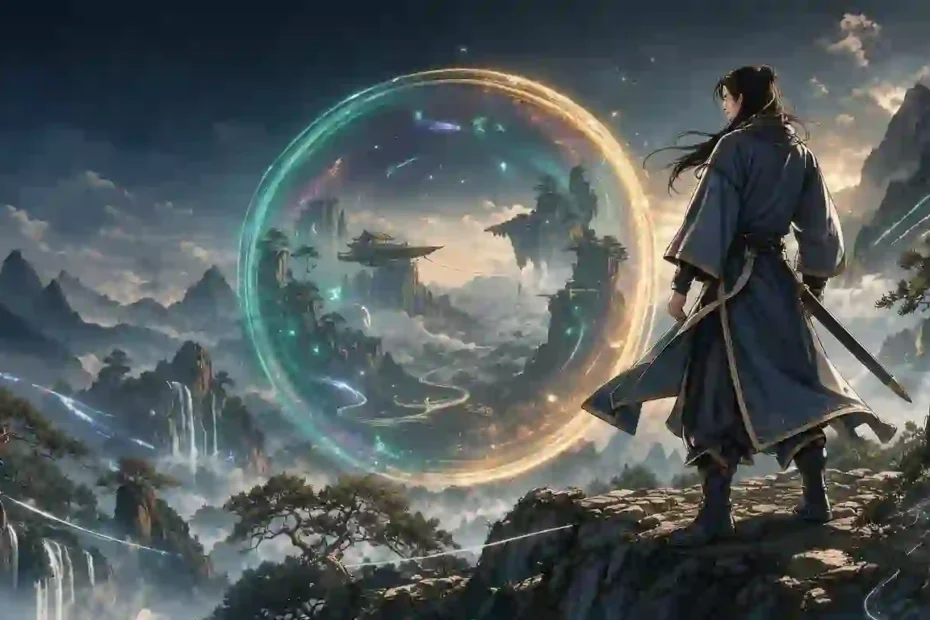
If you’re searching for A Cultivation Master Starts a New Account in Another World, the title alone leaves a key question unanswered: what sort of fantasy adventure does it promise? Thin summaries can make a fresh-world premise sound like every other cultivation story, while chapter-by-chapter spoilers can spoil the fun. This guide brings official listing details, chapter-title clues, and practical reader advice together, without inventing scenes or promising a guaranteed favorite.
Quick answer: what is the series about?
A Cultivation Master Starts a New Account in Another World is the English search title used in this guide for a Chinese fantasy manhua listed by Tencent Comics as 修仙大佬异世界开小号. Its official synopsis says a powerful cultivation master seeks excitement by starting an alternate account in another world, then discovers something unexpected. The synopsis leaves that discovery open, so this overview does too.
The series is credited to 拾部的部 on Tencent Comics, which marks it as ongoing. iQIYI Bada lists the work under the shorter title 独自去修仙 and places it in adventure, fantasy, and xuanhuan categories. The chapter titles point to cultivation, dungeons, beast taming, magic, auctions, monsters, and sword intent, making it a cross-genre fantasy adventure rather than a plain training diary.
At a glance: title, creator, status, and genre
| Detail | What the official listings show |
|---|---|
| English search title used here | A Cultivation Master Starts a New Account in Another World |
| Tencent Comics title | 修仙大佬异世界开小号 |
| iQIYI Bada title | 独自去修仙 |
| Creator credit | 拾部的部 on Tencent Comics; 拾部 on iQIYI Bada |
| Format | Chinese manhua, presented in online comic chapters |
| Status | Tencent Comics marks the series as ongoing |
| Official categories | Adventure, fantasy, and xuanhuan on the iQIYI Bada listing |
| Core premise | A powerful cultivator starts an alternate life in another world to find excitement |
| Latest chapter shown in the Tencent listing checked for this guide | Chapter 22, dated June 5, 2026; check the platform for later releases |
English title wording can vary from one catalog to another. This page uses the search phrase supplied for the article, while the Chinese platform listings use their own titles. The chapter-title translations below are plain-English glosses for navigation, not publisher-confirmed English localization.
Spoiler-light plot overview
The official synopsis gives the story a simple but useful starting point: its lead is already a powerful cultivation master. Instead of climbing from nothing, the master seeks a fresh challenge by opening an “alt account” in another world. The setup turns a familiar fantasy question around: what happens when a person who has already mastered one path enters a place with unfamiliar rules?
That premise creates two sources of momentum. The lead may bring skill and confidence, but a different world can still introduce new systems, people, dangers, and limits. The official blurb ends with an ellipsis after hinting at a surprising discovery, so a spoiler-light guide should not fill that gap with a guess.
A Cultivation Master Starts a New Account in Another World is therefore best approached as a story about contrast. The lead’s old expertise meets a new environment, and the reader can watch for the points where familiar cultivation ideas do or do not work. The chapter list adds clues about that mix, but titles alone cannot confirm every scene or character detail.
What does “new account” mean in the title?
In gaming, a new or alternate account often means starting a separate character or run without erasing the original player’s experience. The title borrows that idea to suggest a powerful cultivator beginning a fresh adventure in a different world. It does not, by itself, prove that the story takes place inside a video game or that the lead uses a literal login system.
That distinction matters for readers choosing a series. Some fantasy titles use game language as a metaphor for a second life, a new identity, or a clean slate; others build an actual game interface into the plot. The official synopsis supports the “alternate account” idea, but it does not describe a game menu, a system window, or a reincarnation mechanic.
The phrase also hints at a playful imbalance. A beginner may look inexperienced in the new setting while carrying years of mastery from somewhere else. That gap can create comedy, surprise, or tension, depending on how other characters react and how much of the lead’s ability becomes visible.
How cultivation meets another-world fantasy
Cultivation fantasy often follows a person’s effort to improve through training, discipline, energy control, rare materials, teachers, and difficult trials. Readers may also see ideas such as qi, meridians, pills, spirit creatures, sword intent, and stages of advancement. Those are genre conventions, not a promise that every story uses the same rules or explains them in the same way.
The official chapter names for this series include references to meridians, a pill, beast taming, magic, a dungeon, and sword intent. Those labels suggest that the new world may place cultivation concepts beside fantasy elements with different names or logic. The useful reading question is not simply “Who has the bigger power level?” but “Which rules apply here, and what does the lead need to learn?”
This blend can appeal to readers who enjoy Chinese cultivation stories and also want the pace of a portal-fantasy adventure. It gives the writer room to compare methods: inner training against external magic, careful preparation against brute strength, or familiar cultivation tools against a new world’s resources. The chapter headings make those intersections worth watching without revealing how each one plays out.
Chapter guide: a spoiler-light map of the listed chapters
Tencent Comics’ listing shows chapter titles in Chinese. To browse A Cultivation Master Starts a New Account in Another World without spoilers, use this table as a map of the visible vocabulary, not a substitute for the chapters. The English phrases are descriptive translations to help readers follow the sequence; exact wording can differ in an official English edition. The “what it signals” column reads the title only and should not be mistaken for a full plot summary.
| Chapter | Chinese listing title | Plain-English gloss | What the title signals |
|---|---|---|---|
| 1 | 无敌最寂寞 | Invincibility Is the Loneliest | Introduces the tension between great power and boredom. |
| 2 | 量子修仙 | Quantum Cultivation | Pairs modern science language with cultivation vocabulary. |
| 3 | 普通人 | An Ordinary Person | Raises a contrast between how someone seems and what they can do. |
| 4 | 修补经脉 | Repairing the Meridians | Points to a familiar body-and-energy concept in cultivation fiction. |
| 5 | 炼鸡精 | Refining Chicken Essence | Uses an unusual cultivation phrase; the literal gloss may not match an official translation. |
| 6 | 进入副本 | Entering a Dungeon or Instance | Introduces a game-like adventure term in the chapter name. |
| 7 | 初试驭宠 | First Attempt at Beast Taming | Signals an early encounter with creature control or a companion mechanic. |
| 8 | 被偷袭 | Ambushed | Suggests that the new environment can pose a direct threat. |
| 9 | 具现化魔法 | Manifesting Magic | Puts another-world magic clearly in the chapter vocabulary. |
| 10 | 激发 | Activation | Hints at a power or ability being triggered. |
| 11 | 以身为鼎 | Taking the Body as a Cauldron | Uses an alchemy-style image connected to cultivation. |
| 12 | 痛快 | A Satisfying Release | Suggests a moment of relief or excitement; the exact context is not stated by the title. |
| 13 | 之后的路 | The Road Ahead | Marks a point where the next direction matters. |
| 14 | 噬血寒髓丹 | Blood-Devouring Cold Marrow Pill | Signals a named pill or resource tied to cultivation lore. |
| 15 | 估值 | Valuation | Brings a measure of worth, price, or appraisal into view. |
| 16 | 拍卖 | Auction | Moves attention toward trade, competition, and public value. |
| 17 | 成交 | Deal Closed | Continues the transaction thread suggested by the previous title. |
| 18 | 坐飞艇 | Riding an Airship | Points to travel through a fantasy setting with its own technology. |
| 19 | 怪物入侵 | Monster Invasion | Raises the scale from a personal challenge to a wider threat. |
| 20 | 隐藏实力 | Concealing Strength | Signals a familiar question about when to reveal power. |
| 21 | 归一剑意 | Unified Sword Intent | Returns to martial cultivation language and sword technique. |
| 22 | 邀请 | Invitation | Ends the currently listed sequence on an opening or offer. |
The table gives a fast route through the series’ visible vocabulary. It does not claim that every title marks a complete story arc, and it avoids revealing events that the official synopsis does not describe. Readers who want the cleanest experience can read the chapters first, then use the headings to recall how the setting expands.
What kind of pacing do the chapter titles suggest?
Chapters 1 through 5 appear to establish the central contrast and introduce cultivation terms. The wording moves from invincibility and quantum cultivation to ordinary people, meridians, and an unusual alchemy phrase. That opening sequence suggests a story interested in both the lead’s starting advantage and the details of adapting to a new system.
Chapters 6 through 12 shift toward active trials in the titles: a dungeon, beast taming, an ambush, magic, activation, and the body-as-cauldron idea. This is the point where readers can check whether the series balances action with explanation. A strong crossover premise works best when its new rules feel legible, not when every obstacle disappears because the protagonist is powerful.
Chapters 13 through 18 introduce a road ahead, a pill, appraisal, an auction, a deal, and airship travel. These names point toward world-building through resources and movement, not only through combat. Chapters 19 through 22 then name a monster invasion, hidden strength, sword intent, and an invitation, which hints at larger stakes and a possible next direction.
What is confirmed about the lead and supporting cast?
The official platform summaries identify the central figure by role: a powerful cultivation master looking for excitement in another world. The listing details available for this guide do not provide a confirmed personal name or a complete cast roster. For that reason, this article refers to the lead by role instead of inventing a name or assigning unverified relationships.
The chapter titles offer glimpses of possible story ingredients, such as beast taming, magic, trade, and sword practice. They do not establish who performs each action, who joins the lead, or how a conflict resolves. Readers who want character names and relationships should check the chapter pages themselves and rely on details shown in the comic, not on title-based guesses.
This careful distinction also protects future updates. If the publisher adds a character profile or changes the series description, the page can be revised with primary information rather than having to undo claims copied from speculation. The result is more useful to both new readers and fans checking details.
Themes and tropes to watch for
The premise invites several questions that can help readers decide what they want from the series. They are useful lenses, not claims about the author’s final message.
- Boredom after mastery: The opening suggests that success can become dull when nothing feels difficult. Watch whether the new world restores curiosity or simply supplies stronger opponents.
- Skill versus context: The lead may understand cultivation, but the new world’s rules could make old knowledge incomplete. Notice which abilities transfer cleanly and which require adjustment.
- Power and restraint: A person who can dominate a conflict still has to choose whether to act openly. The “hidden strength” chapter title makes that question especially relevant.
- Starting over without forgetting: A fresh account sounds like a new beginning, yet the master carries prior experience. That tension can shape identity, patience, and the way the lead treats beginners.
- Different systems meeting: The chapter vocabulary puts cultivation beside magic, dungeons, creatures, and travel technology. The fun may come from how those systems interact, rather than from a single ranking scale.
- Adventure as a cure for stagnation: The official synopsis frames the move as a search for excitement. Readers can watch whether novelty brings lasting purpose or only a temporary thrill.
These themes make the series easy to discuss without overstating its plot. A thoughtful review can ask how the comic handles each question after reading the relevant chapters, then support its opinion with specific scenes. That firsthand detail is more valuable than repeating broad genre labels.
Is this an isekai story, a reincarnation story, or both?
A Cultivation Master Starts a New Account in Another World fits the broad another-world fantasy idea because its official synopsis sends a cultivation master into a different world. “Isekai” can work as a reader-friendly genre label for that setup. The official wording available here does not say that the master dies, reincarnates, or travels through a particular portal.
Use more precise language when describing the premise. “Another-world cultivation fantasy” is supported by the official synopsis, while “reincarnation story” needs evidence from the actual chapters. That difference matters because readers often use those terms to filter for specific plot devices, and a wrong label can set the wrong expectation.
The “new account” wording may be a metaphor for starting fresh, but the official summary does not explain the mechanism. It could signal a new identity, a separate cultivation path, or another kind of setup. The safest page description states what the listing confirms and leaves the unexplained detail as a question for the comic.
What genres and tone should readers expect?
The official iQIYI Bada listing places the series in adventure, fantasy, and xuanhuan categories. Tencent Comics presents the work within its fantasy and adventure catalog structure. Together, those labels support a broad description: a Chinese cultivation fantasy with another-world adventure elements.
The chapter names hint at a mix of serious stakes and playful contrasts. “Quantum Cultivation” and “Refining Chicken Essence” sound unconventional beside “Monster Invasion” and “Unified Sword Intent.” Still, a chapter title cannot prove that the full series is a comedy or tell a reader how often jokes appear, so the safest expectation is genre-mixing rather than a guaranteed comedic tone.
Readers who care about the exact balance can sample the opening chapters. Pay attention to how often the comic explains its cultivation terms, how quickly it moves between action and setup, and whether the humor lands for you. That small test is more reliable than a genre tag alone.
Who may enjoy the series?
A Cultivation Master Starts a New Account in Another World may suit readers who like an already capable lead facing unfamiliar rules. The premise puts a seasoned cultivator in a setting where magic, dungeons, monsters, and other fantasy elements can complicate what the lead already knows. If that clash sounds fun, the opening chapters offer a clear way to test the fit.
The series may also appeal to readers who enjoy Chinese manhua, xianxia or xuanhuan concepts, and fast-moving fantasy adventures. Its chapter list signals a range of ingredients, from meridian work and pills to auctions, airships, and sword intent. Readers curious about how those ideas can coexist will have several things to watch for.
It may be less suited to someone who wants a very slow, ground-up cultivation journey with a powerless lead. It may also frustrate readers who only start completed series, since Tencent Comics currently marks this title as ongoing. If either preference matters, check the latest official listing before committing.
Where can you check the official release?
Tencent Comics lists the series under 修仙大佬异世界开小号 and credits 拾部的部. iQIYI Bada uses the title 独自去修仙 and credits 拾部. When searching for A Cultivation Master Starts a New Account in Another World, try those Chinese titles too; they can separate this comic from similarly named cultivation stories when an English catalog uses a different translation.
Chapter counts and access can differ by platform, account, region, and date. The Tencent Comics listing checked for this article showed chapter 22, dated June 5, 2026, while platform catalogs may display different chapter availability. Treat the chapter count as a dated snapshot, not a permanent total, and confirm the current release information on the official service you use.
This guide does not confirm an English-licensed edition. If you need English text, check the publisher or platform’s current language options in your region before relying on a third-party catalog. Using official listings also helps readers verify creator credits and avoids confusing the work with fan translations or unrelated series.
Is A Cultivation Master Starts a New Account in Another World worth reading?
Whether the series is worth your time depends on what you want from a fantasy comic. If an experienced cultivator entering an unfamiliar world sounds more appealing than watching a beginner start from zero, try the opening chapters. The first chapter title itself frames invincibility as a source of loneliness, which gives the setup a clear emotional question to test.
A practical way to decide is to sample the first three to five chapters and ask: Does the lead’s reason for seeking a new challenge interest me? Do cultivation terms feel clear enough? Does the contrast between familiar training and a different world make me curious about the next chapter? If two or more answers are yes, continue into the dungeon and magic titles to see whether the adventure develops in a direction you enjoy.
If your main priority is a fully completed story, wait until the official platform marks it complete. If you dislike protagonists who begin with major advantages, the core setup may not suit you. Neither reaction makes the series good or bad in general; it simply helps match a comic to the reader.
How to assess the comic beyond its premise
An engaging summary cannot tell you whether the art, panel flow, translation, or character writing will work for you. A useful personal review should discuss those elements only after reading the comic, and it should name a concrete example rather than relying on vague praise. For instance, note whether a fight is easy to follow, whether a new cultivation term gets enough context, or whether a scene gives the lead a meaningful choice.
Readers can also consider the rhythm of each chapter. Does the comic spend time on world-building before a fight, or does it move quickly from one event to the next? Do cliffhangers feel earned? Does the lead’s prior mastery create fresh problems, or does it remove every obstacle? Those questions turn a casual impression into a useful recommendation for someone with similar tastes.
A review of A Cultivation Master Starts a New Account in Another World should separate personal preference from checkable facts. “I liked the pacing” is an opinion; “the official listing marks the series ongoing” is a fact that can be verified. Keeping those apart builds trust and gives readers a better basis for deciding what to read.
Why this guide is careful about facts
The publisher listings confirm the Chinese title, creator credit, broad categories, ongoing status, synopsis, and chapter names. They do not provide enough information to name the lead, explain the unexpected discovery, or guarantee a specific translation, so this page does not fill those gaps with invented detail. That boundary is especially important for a series whose official synopsis deliberately ends on a hook.
The English chapter names in the table are editorial glosses from the Chinese listing. They help readers understand the vocabulary, but they should not be quoted as official English chapter titles. When a licensed translation becomes available, update the table from that edition and make clear which title source you used.
A named author should add a short firsthand note before publication: which chapters they read, which language edition they used, and one specific observation about storytelling or art. Do not claim a personal reading experience that did not happen. Google Search Central’s guidance favors useful, reliable, people-first pages, and a clear source basis is stronger than a polished but unverifiable review.
Frequently asked questions
What is A Cultivation Master Starts a New Account in Another World about?
The official synopsis for A Cultivation Master Starts a New Account in Another World follows a powerful cultivation master who seeks excitement by starting an alternate account in another world. It hints at an unexpected discovery but does not explain it, so this guide avoids spoilers.
Is it a manhua, manga, or novel?
The official listings present it as a Chinese online comic, or manhua. The Tencent Comics page lists comic chapters rather than identifying the work as a prose novel.
Who created the series?
Tencent Comics credits 拾部的部. iQIYI Bada credits 拾部, a shorter form shown on that platform.
Is the comic still ongoing?
Tencent Comics marks it as ongoing. The listing checked for this guide showed chapter 22 dated June 5, 2026; verify the current chapter count on the official platform before relying on that snapshot.
Is the story about reincarnation or a game system?
The official synopsis confirms a powerful cultivator starts an alternate account in another world, but it does not confirm reincarnation or a literal game interface. Read the opening chapters for the exact mechanism.
Where can I read A Cultivation Master Starts a New Account in Another World officially?
Check Tencent Comics under 修仙大佬异世界开小号 and iQIYI Bada under 独自去修仙. Availability, chapter access, and language options can vary by region and account.
Final thoughts: start with the official premise, then decide for yourself
A Cultivation Master Starts a New Account in Another World has a clear hook: a powerful cultivator, tired of familiar limits, enters a different world to find a new challenge. Its listed chapters move through cultivation terms, dungeons, magic, trade, monsters, and sword intent, giving readers a spoiler-light sense of the terrain without revealing the story’s unanswered discovery.
If the clash between old mastery and new rules interests you, sample the opening chapters on an official platform and see whether the comic earns your attention. Share what you noticed about the art, pacing, or world-building in a thoughtful review, and help the next reader decide whether this adventure belongs on their list.