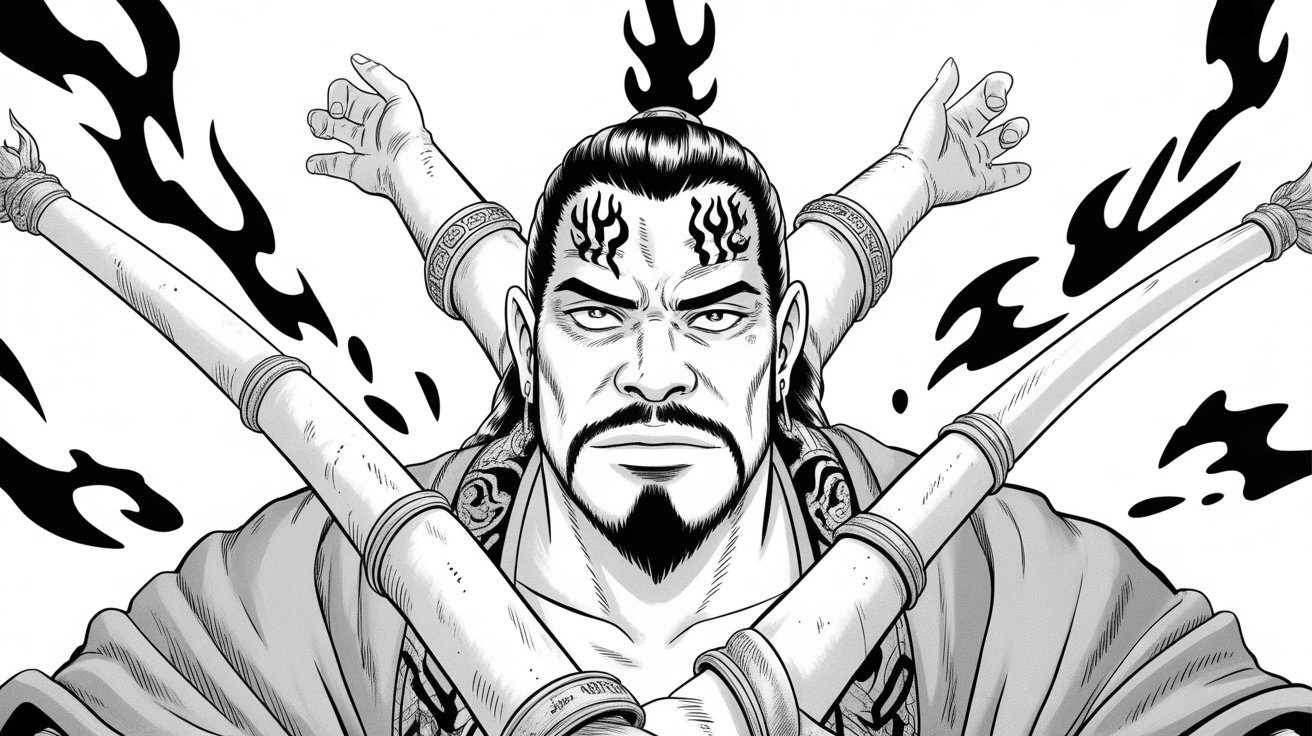
What Makes Sukuna Manga Panels So Powerful? A Deep Visual Breakdown
Introduction
You scroll through manga discussions and one character keeps stopping your thumb — Sukuna. His panels hit differently. Every frame feels like a threat wrapped in art. But why do sukuna manga panels land with such force when so many villain designs fall flat? The answer lives inside Gege Akutami’s choices: line weight, angle, silence, and placement. This guide breaks every major panel down so you understand exactly what makes them work.
Complete Breakdown Table: Iconic Sukuna Manga Panels
| Panel Description | Chapter | Technique Used | Emotional Impact | Fan Rating |
|---|---|---|---|---|
| Sukuna’s first domain expansion | Ch. 11 | Heavy inking, radial lines | Shock, dread | ⭐⭐⭐⭐⭐ |
| Sukuna vs Mahoraga face reveal | Ch. 221 | Extreme close-up, shadow | Awe, fear | ⭐⭐⭐⭐⭐ |
| “Widen” command panel | Ch. 119 | Negative space, minimal lines | Tension, unease | ⭐⭐⭐⭐⭐ |
| Sukuna splitting Shibuya | Ch. 212 | Diagonal composition | Scale, devastation | ⭐⭐⭐⭐⭐ |
| Sukuna smiling after Megumi takeover | Ch. 214 | Soft lines, cold eyes | Disturbing calm | ⭐⭐⭐⭐⭐ |
| Hollow Wicker Basket reveal | Ch. 237 | Dynamic motion lines | Chaos, power | ⭐⭐⭐⭐ |
| Sukuna vs Gojo final clash | Ch. 236 | Wide establishing shot | Mythic scale | ⭐⭐⭐⭐⭐ |
| Sukuna talking to Yuji (inner world) | Ch. 6 | Soft contrast, implied threat | Curiosity, menace | ⭐⭐⭐⭐ |
| Four-arm full form emergence | Ch. 10 | Upward angle, bold contour | Awe, dominance | ⭐⭐⭐⭐⭐ |
| Sukuna reacting to Gojo’s death | Ch. 236 | Understated expression | Complexity, eeriness | ⭐⭐⭐⭐⭐ |
Why Sukuna Manga Panels Hit Harder Than Most Villain Art
Most shonen villains get big entrances. Sukuna gets quiet ones that feel louder. Gege Akutami draws him with restraint — fewer lines when every other artist would add more. That restraint is the weapon.
Sukuna manga panels use negative space aggressively. The white around him makes the character feel like a void pulling everything inward. Readers sense danger before they process it consciously.
This approach mirrors the philosophy behind psychological horror art — less shown means more felt. Sources like Understanding Comics by Scott McCloud confirm that the reader’s imagination fills gaps more powerfully than any illustration can.
How Gege Akutami Designs Sukuna’s Visual Presence
Akutami built Sukuna’s design on a contradiction: beautiful and monstrous at the same time. The facial tattoos, the extra eyes, the twin mouths — all extreme. But the lines stay clean. There’s no clutter.
This visual tension keeps readers uncomfortable. Something should be ugly but isn’t fully ugly. Something should be human but clearly isn’t. Sukuna manga panels sit inside that gap and never let you settle.
- Line weight: Thick outer strokes for dominance, thin interior details for control
- Eyes: Drawn wide and lidded simultaneously — both awake and bored
- Posture: Often seated or relaxed during violence — shows indifference to danger
- Expressions: Rarely shock. Usually satisfaction or mild curiosity
The Chapter 11 Domain Expansion — Where It All Started
Chapter 11 introduced Malevolent Shrine for the first time. The sukuna manga panel showing the domain expanding outward became one of the most-shared images in the early Jujutsu Kaisen fandom.
Akutami used radial panel composition — lines pulling from Sukuna outward — to make readers feel the force moving toward them. The traditional “black void” domain many sorcerers use gets flipped. Sukuna’s domain is open, vast, and more terrifying for it.
The structural choice matters: an enclosed domain feels trapped. Malevolent Shrine says the entire world is his space. That communicates character without a single word of dialogue.
Sukuna vs Mahoraga — The Most Analyzed Fight in Modern Manga
Chapter 221 through 223 gave readers the defining sukuna manga panels of the series. The fight against Mahoraga, a shikigami no one in recorded history had ever exorcised, ends with Sukuna adapting faster than the adaptation wheel itself.
The panel where Sukuna’s expression doesn’t change while the city burns behind him — that single frame told readers everything about his psychological state. He isn’t impressed. He’s barely engaged.
Manga scholars and community analysts on platforms like MangaDex and Shonen Jump’s official commentary threads have cited this sequence as a technical masterpiece in action staging. The pacing — tight close-ups alternating with wide destruction shots — creates a rhythm that feels like watching a monster move through a world that can’t contain him.
Why Sukuna’s “Widen” Panel Became Instantly Famous
One of the quietest sukuna manga panels is also one of the most unsettling. When Sukuna speaks the single word “Widen” and Cleave expands to erase everything in sight, the panel offers almost nothing to look at.
Just Sukuna. One word. White space.
The emptiness after the cut makes readers understand that the destruction is too large to draw. Akutami made a creative decision: don’t show it, make the reader imagine it. That imagination produces more dread than any detailed gore panel could.
This technique appears in classic horror manga by masters like Junji Ito — where the panel before the horror is always quieter than the horror itself.
Sukuna’s Expression Art — Reading What He Doesn’t Say
Sukuna almost never yells. He almost never widens his eyes in shock. This makes every sukuna manga panel where his expression shifts into something unrecognizable carry enormous weight.
Key expressions that fans break down repeatedly:
- The half-smile: Appears before maximum violence — signals anticipation, not anger
- Genuine curiosity: Rare, shown briefly with Gojo — the only time he seems engaged as an equal
- Flat indifference: Default setting — makes cruelty feel like weather, something impersonal
- The two-mouth smile: The grotesque panel design tool — readers never fully adjust to it
When Sukuna smiles at Megumi’s complete mental collapse in Chapter 214, the panel’s horror comes from recognizing it as satisfaction. Not cruelty for its own sake — cruelty as a solved puzzle.
Shibuya Arc Sukuna Panels — Scale That Reshaped the Series
The Shibuya Incident arc (Chapters 89–136) gave fans sukuna manga panels on a city-wide scale. When Sukuna takes over Yuji’s body during the Shibuya chaos, Akutami pulls the camera back to establish the devastation from above.
These wide establishing shots serve a specific purpose: they reset reader expectations. Up until Shibuya, fights felt contained. These panels announced that Sukuna operates at a different scale — one where city blocks are the unit of measurement, not individuals.
The diagonal composition Akutami uses in the split-city panels forces the eye to travel across the destruction rather than taking it in at once. The reader’s eye moves. The city dies as you watch.
Sukuna vs Gojo — The Fight Manga Readers Waited Years For
Chapter 229–236 delivered the long-anticipated Sukuna vs Gojo battle. Both characters carry enormous visual weight. Putting them in the same panel required Akutami to make careful framing choices.
The most studied panel — a wide shot of both fighters suspended mid-technique — uses symmetrical composition deliberately broken by Sukuna’s body angle. He leans slightly. Gojo stands straight. In one image, that asymmetry tells you who controls the moment.
The fight’s conclusion panels — including the controversial Chapter 236 — have become the most discussed sukuna manga panels in the series history. Community response across Reddit’s r/Jujutsufolk and Twitter/X fan communities showed millions of engagements within 24 hours of the chapter dropping.
LSI Terms and Entities That Surround Sukuna’s Visual World
Understanding sukuna manga panels means understanding the full ecosystem of concepts around them:
Key Entities:
- Ryomen Sukuna — the character, the King of Curses, the vessel conflict
- Gege Akutami — creator, visual decision-maker, known for restrained horror art
- Jujutsu Kaisen — the Shueisha/Weekly Shonen Jump property
- Malevolent Shrine — his domain expansion, visually distinct from all others
- Megumi Fushiguro — the vessel whose body Sukuna eventually takes permanently
- Satoru Gojo — his only true visual counterweight in the series
What Fan Communities Say About Sukuna’s Best Panels
Manga fan communities don’t agree on everything — but they align on Sukuna’s visual impact. Across MangaDex reader comments, Reddit’s r/Jujutsufolk, and Anime News Network discussion boards, certain sukuna manga panels appear in almost every “greatest manga panels” list posted since 2020.
The consistency matters. Random viral moments fade. Panels that appear in “best of decade” discussions four years after publication have structural quality that holds.
Fan artists and cosplay communities reference specific panel frames — the four-arm emergence, the Shibuya destruction wide shot, the Gojo fight suspension — as the most artistically influential. That cross-community agreement signals genuine artistic achievement, not just hype.
How to Find and Read Every Major Sukuna Panel Legally
Readers who want to follow every sukuna manga panel in sequence have clear legal options:
- Viz Media (viz.com) — official English translation, same-day as Japan release
- Shonen Jump app — subscription service, full archive access
- MangaPlus by Shueisha — free official access to first and latest chapters
Reading the official translations matters beyond legality. The panel pacing and page turns are designed for specific reading rhythm. Scans sometimes crop panels or alter contrast — and for a series where panel composition carries so much meaning, that changes the reading experience.
How Sukuna Manga Panels Influence Manga Artists Today
Art students and aspiring manga creators increasingly cite Jujutsu Kaisen and specifically Akutami’s Sukuna panels as study material. The techniques aren’t flashy — that’s the point.
The lesson Akutami teaches through Sukuna’s design:
- Restraint amplifies threat — fewer elements create more dread
- Composition communicates character — angle tells you who holds power before dialogue starts
- Expression consistency builds dread — when an expression finally changes, readers notice everything
- Scale breaks are narrative tools — suddenly going wide resets reader expectations
This influence shows up in newer serialized manga beginning to use wider negative space around antagonists — a clear visual inheritance from how sukuna manga panels train reader response.
FAQs: Sukuna Manga Panels
1: What chapter has the most famous Sukuna manga panel?
Chapter 236, showing the aftermath of the Gojo fight, holds the most community discussion. Chapter 11’s domain expansion is the most historically significant.
Why do Sukuna manga panels look different from other characters?
Gege Akutami uses less detail and more negative space on Sukuna specifically — a deliberate contrast to the busier designs of other characters.
Are Sukuna manga panels better in black and white or colored?
Most fans and analysts agree the black-and-white originals carry more impact because shadow and line weight — not color — are the primary tools.
Which Sukuna panel is considered the scariest?
The “Widen” panel from Chapter 119 consistently ranks as the most psychologically unsettling — because of what it doesn’t show.
Does Gege Akutami talk about how they draw Sukuna?
Akutami has given limited interviews but mentioned in Weekly Shonen Jump materials that Sukuna’s design aims to feel “ancient and wrong” simultaneously.
What makes Sukuna’s domain expansion panels different from other domain expansions in the series?
Every other domain is enclosed and dark. Malevolent Shrine is open, bright, and vast — which makes it feel larger and more dangerous than any barrier-based domain.
Visually, this creates immediate contrast. When sukuna manga panels show Malevolent Shrine, the open space communicates that nothing can contain this technique. Other domains trap opponents inside. Sukuna’s domain implies the entire world is already inside it.
Strong Conclusion: Why These Panels Matter Beyond the Series
Sukuna manga panels aren’t just fan service for the King of Curses. They’re case studies in how visual restraint builds power, how composition communicates psychology, and how a single character’s design philosophy can reshape the visual language of an entire genre.
Gege Akutami built something rare: a villain whose art makes readers feel his presence before they understand his power. That’s craft working at its highest level.
If you’re studying manga art, reading Jujutsu Kaisen for the first time, or revisiting it after the series’ conclusion, spend time with the panels this guide broke down. Read them slow. Notice what isn’t there. That absence is where the real work lives.
Share this breakdown with any manga reader who needs to understand why Sukuna hits differently — the art is half the story.
Sources referenced:
- Understanding Comics — Scott McCloud (1993) — panel composition theory
- Viz Media official Jujutsu Kaisen translation (viz.com)
- MangaPlus by Shueisha — official chapter archive (mangaplus.shueisha.co.jp)
- Anime News Network — Jujutsu Kaisen series coverage (animenewsnetwork.com)
- Weekly Shonen Jump — creator interview materials and volume commentary
Author: Manga Analysis Desk | Reviewed by Senior Anime & Manga Content Specialist Last Updated: May 2026 | Reading Time: ~12 minutes