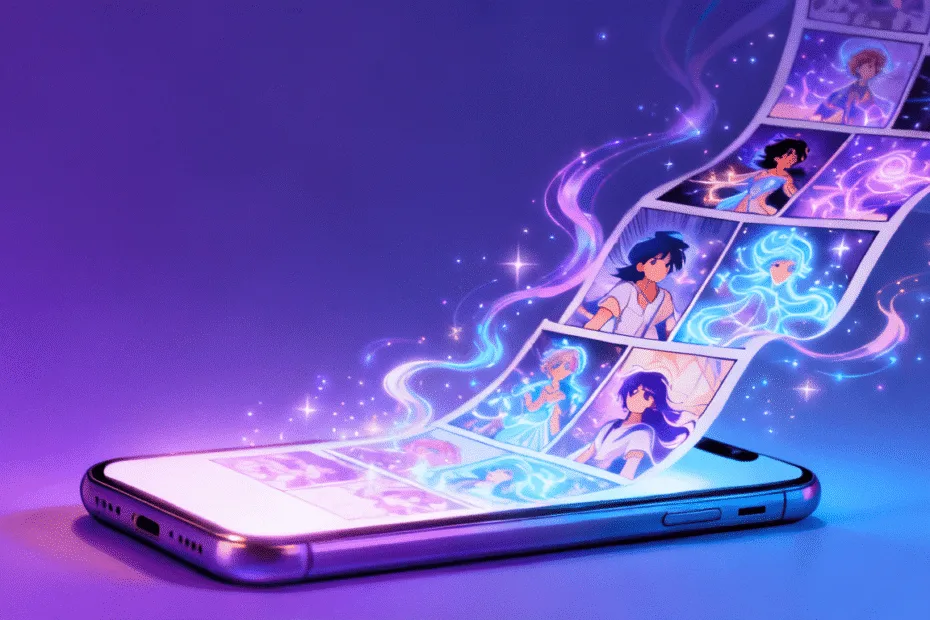
You scroll past another friend’s story about a series they stayed up until 3 a.m. reading. The colors, the characters, the cliffhangers—they cannot stop talking about it. You want that same excitement. You want stories that fit your phone, your schedule, and your thirst for something new. Webtoons give you exactly that: stories built for how you read today.
What Is a Webtoon?
A webtoon is a digital comic designed for vertical scrolling on a smartphone or tablet. The term blends “web” and “cartoon.” Unlike printed comics that force you to flip pages left to right, a webtoon flows top to bottom in a single, continuous strip. Every panel sits stacked so your thumb never stops moving.
South Korea invented the webtoon format in the late 1990s and early 2000s. Today the word describes both the medium and one of its largest platforms, WEBTOON, owned by Webtoon Entertainment Inc.
Key traits that define every webtoon:
- Full-color artwork on every panel
- Vertical, scroll-based reading optimized for phones
- Episodic release schedules, often weekly
- Free access with optional paid fast-pass systems
- Multimedia elements including music and subtle animation
| Feature | Webtoon | Traditional Comic / Manga |
|---|---|---|
| Reading direction | Vertical scroll (top to bottom) | Left to right (manga: right to left) |
| Color | Full color | Mostly black and white |
| Device optimization | Smartphone-first | Print-first, later digitized |
| Panel layout | Continuous strip, spacing for dramatic pauses | Fixed grid on each page |
| Music & animation | Often included | Rare |
| Access cost | Freemium (free with paid extras) | Purchase per volume or chapter |
The History of Webtoons: From Korean Roots to Global Phenomenon
The webtoon traces back to the late 1990s. During the Asian Financial Crisis of 1997, out-of-work artists in South Korea began uploading their comics to personal homepages and blogs. These early digital strips gave creators an outlet when print markets dried up.
In 2003, Daum launched the first dedicated webtoon publishing platform. One year later, Naver Corporation followed with Naver Webtoon, created by Junkoo Kim. Kim had worked as a programmer at Naver and loved comics. Watching how people scrolled through web pages gave him the idea: comics should scroll too.
The term “webtoon” first appeared in a Korean newspaper around 2000. By 2006, the first webtoon-based film adaptations hit Korean cinemas, including A.P.T. based on Kang Full’s work.
Naver Webtoon launched its global English service in July 2014. The platform crossed 85 million users worldwide and became the largest webcomics platform in the United States. In 2024, Webtoon Entertainment Inc. went public on Nasdaq under the ticker WBTN.
Today the global webcomics market sits at an estimated $8.17 billion (2025) and projects to reach $14.73 billion by 2034. The webtoon industry grew from a niche hobby of unemployed artists into a multi-billion-dollar global entertainment force.
How Webtoons Differ from Manga and Traditional Comics
The webtoon reading experience feels entirely different from manga or Western comics. Manga volumes demand you hold a book, turn physical pages, and read panels right to left. American comics follow a left-to-right grid across double-page spreads.
A webtoon removes all that friction. You hold your phone in one hand and scroll. That is the entire interaction. No zooming. No rotating. No losing your place.
Webtoons also use space differently. Traditional comics pack panels tightly. A webtoon uses blank vertical gaps between panels to control pacing. A long empty scroll creates silence, suspense, or the feeling of sinking—something impossible in print.
Full color comes standard with every webtoon. Manga typically runs black and white to save printing costs. Western comics use color but at a higher price point. Webtoons face no printing costs, so creators work in color without budget constraints.
The webtoon format has proven so effective that Japanese publishers like Kadokawa now launch vertical-scroll manga specifically to compete in the webtoon space.
Why the Vertical Scroll Format Wins on Mobile
Smartphone users scroll. Social media feeds, news articles, messaging apps—everything moves vertically. The webtoon format matches this natural behavior. Readers process continuous scroll content faster and stay engaged longer than with paginated layouts.
Key reasons the vertical scroll webtoon dominates mobile reading:
- No page-turn delay: Panels blend seamlessly. Your eye never waits for the next page to load.
- One-handed reading: Hold your phone with one hand, scroll with your thumb. Perfect for commutes.
- Dramatic control: Creators place empty space between panels to build tension or signal a scene change.
- Binge-ready design: Episodes stack back-to-back. Finishing one pushes you directly into the next.
- Full-screen art moments: Artists can use the entire vertical canvas for splash panels that hit harder than any printed double-page spread can deliver.
Mobile-first design drove the webtoon industry from zero to billions. Asia Pacific alone holds 48.69% of the global webcomics market, fueled by smartphone penetration and mobile-first reading habits.
Top Webtoon Platforms You Should Know
Several webtoon platforms compete for readers worldwide. Each offers a different library, creator ecosystem, and pricing model.
- WEBTOON (Naver): The largest global webtoon platform, with over 1 million titles across every genre. Free to read with optional coins for early access. Available on web, Android, and iOS.
- KakaoPage / Kakao Webtoon: South Korea’s second major webtoon publisher. Kakao operates Piccoma in Japan—the top-grossing comic app in the Japanese market.
- Tapas: A U.S.-based platform hosting independent webtoon creators alongside licensed Korean series. Strong community features and tipping options.
- Tappytoon: Focuses on licensed romance and fantasy webtoon titles, primarily from Korean publishers.
- Lezhin Comics: Known for mature, artist-forward webtoon content with a direct pay-per-episode model.
| Platform | Library Size | Free Tier | Originals | Best For |
|---|---|---|---|---|
| WEBTOON | 1M+ titles | Yes, with ads/coins | Yes | All genres, discovery |
| KakaoPage | 100K+ | Partial | Yes | Korean romance/fantasy |
| Tapas | 100K+ | Yes, with ads/wait | Some | Indie creators |
| Tappytoon | 5K+ | Limited free episodes | Licensed | Romance fans |
| Lezhin Comics | 10K+ | Limited | Mature titles | Adult readers |
Popular Webtoon Genres That Capture Millions of Readers
Webtoon platforms organize content across a wide range of categories. Romance historically leads, but action, fantasy, and horror have surged in recent years.
Top webtoon genres and standout examples:
- Romance: The most popular webtoon genre. Lore Olympus (a modern retelling of Greek myth) became a New York Times bestseller and won multiple Eisner Awards. True Beauty spawned a hit K-drama adaptation.
- Fantasy: Solo Leveling started as a Korean webtoon and grew into a global franchise with an anime adaptation, topping graphic novel sales charts in spring 2025.
- Action: Series like The God of High School and Tower of God built massive followings that led to anime adaptations.
- Horror: Sweet Home and Hellbound both became Netflix original series. Killing Stalking remains one of the most discussed thriller webtoons ever published.
- Comedy / Slice of Life: Millions of webtoon readers who had never read a superhero comic were introduced to Batman’s family by DC Comics‘ collaboration, Wayne Family Adventures.
The webtoon format thrives on genre blending. Romance-fantasy hybrids. Action-horror crossovers. Comedy-drama. The vertical scroll lets creators shift tone instantly, and readers reward that flexibility.

How Webtoon Creators Earn Money
Money flows to webtoon creators through multiple channels. The path differs depending on whether a creator publishes independently or through a platform’s official program.
WEBTOON Originals creators sign contracts with guaranteed episode fees. A 50-episode series at $1,000 per episode guarantees $50,000 in direct production payments—regardless of how the series performs.
Once a series earns beyond its guaranteed threshold through Fast Pass sales (paid early access), creators receive 100% of that revenue until the platform recoups its investment. After that, revenue splits apply.
Additional monetization channels for webtoon creators:
- Fast Pass / Coin systems: Readers pay to unlock episodes ahead of the free schedule.
- Reward Ads: Canvas creators with 100K+ monthly page views can place 30-second video ads on new episodes.
- Merchandise: WEBTOON Shop now sells official apparel, accessories, and collectible editions based on popular series.
- IP adaptations: Successful webtoons get adapted into K-dramas, anime, films, and mobile games—generating licensing revenue for creators.
- Cuts Fund Share: Naver WEBTOON distributes up to $70,000 in monthly rewards to top-performing short-form content creators.
Revenue distributed to webtoon creators worldwide from 2021 to 2025 totaled 4.15 trillion Korean won (approximately $3.1 billion USD).
WEBTOON Originals vs. Canvas: Two Paths for Creators
The WEBTOON platform splits creator content into two tiers: Originals and Canvas. Each serves a different stage in a creator’s journey.
WEBTOON Originals:
- Curated, professionally contracted series
- Guaranteed episode fees and revenue sharing
- Editorial support, marketing push, and visibility on the platform’s front page
- Potential for adaptation into TV, film, and games
- Competitive application and selection process
WEBTOON Canvas:
- Open user-generated content platform; anyone can publish
- No guaranteed income, but creators keep their intellectual property rights
- Access to ad revenue and tipping (once thresholds are met)
- Opportunity to build an audience and get noticed by WEBTOON editors
- In 2026, Canvas unified into a single global platform across seven languages using AI-powered translation tools to help creators reach international readers without extra effort
Tip for new creators: Start on Canvas. Publish consistently for six months. Study which episodes attract the most comments and subscribers. Editors scout Canvas daily for the next Originals contract.
Webtoon Adaptations: From Digital Page to TV Screen
The webtoon industry now feeds the global streaming machine. Netflix, Disney+, and Korean broadcasters mine webtoon catalogs for proven stories with built-in fan bases.
Major webtoon adaptations that dominated screens:
| Webtoon Title | Adaptation | Platform |
|---|---|---|
| Sweet Home | Live-action horror series (3 seasons) | Netflix |
| Hellbound | Supernatural thriller series | Netflix |
| True Beauty | Romantic comedy K-drama | tvN / Viki |
| Itaewon Class | Business revenge drama | JTBC / Netflix |
| Solo Leveling | Anime series (2 seasons) | Crunchyroll |
| Money Game / Pie Game | The 8 Show dark comedy thriller | Netflix |
| Bloodhounds | Action drama (season 2 in production) | Netflix |
| The Remarried Empress | Upcoming fantasy drama | Disney+ |
Naver Webtoon and Kakao Entertainment now compete directly in the production of webtoon-based visual content, moving beyond publishing into full-scale entertainment studios. Studio N, a production arm of Naver Webtoon, develops multiple webtoon adaptations simultaneously, feeding the insatiable demand for Korean-originated IP.
Adaptation works because webtoon stories arrive pre-validated. Millions of readers have already voted with their attention. Producers see storyboards, character designs, and audience reaction data before committing a dollar.
How to Start Reading Webtoons Today
Reading a webtoon requires nothing more than a phone and an internet connection. You can start in under two minutes.
Steps to begin reading webtoons:
- Download the WEBTOON app from Google Play or the Apple App Store, or visit webtoons.com.
- Create a free account using email, Google, or Apple login.
- Browse genres, rankings, or the editor-curated homepage.
- Tap any cover to view the series summary, episode list, and reader ratings.
- Start from episode one. The vertical scroll format guides you naturally.
- Subscribe to series you enjoy. The app notifies you when new episodes drop.
Pro tips for a better reading experience:
- Download episodes on Wi-Fi for offline reading during commutes.
- Use the daily free coin events to unlock Fast Pass episodes without spending money.
- Explore the comments section after each episode—webtoon communities are active and often hilarious.
- Try Canvas titles alongside Originals. Independent creators deliver some of the most original storytelling on the platform.
- Track your reading with the app’s built-in library, which marks unread episodes and shows update schedules.
The Future of the Webtoon Industry
The webtoon market expands rapidly. Multiple forecasts point to continued double-digit growth through 2034. The Business Research Company estimates the webtoon market could reach $36.33 billion by 2030.
Forces shaping the next five years of webtoon:
- AI translation and localization: Canvas now offers AI-powered translation into seven languages, letting creators publish globally with one upload.
- Interactive and multimedia webtoons: Creators experiment with embedded music, animated panels, and choose-your-path storytelling.
- AR/VR integration: Platforms test augmented reality experiences that bring webtoon art into physical space.
- Vertical video crossovers: Naver WEBTOON launched Cuts, a short-form animation service that translates webtoon panels into TikTok-style video clips.
- Gaming cross-pollination: Partnerships between webtoon publishers and game studios place original IP into mobile games, expanding audience reach.
- Direct-to-consumer merchandise: The WEBTOON Shop now sells limited-edition collectibles tied to active series, creating new revenue for creators and publishers alike.
The webtoon format already rewired how millions consume comics. The next phase rewires how stories get financed, produced, and adapted across every medium.
Frequently Asked Questions About Webtoons
1. What exactly is a webtoon?
A webtoon is a full-color digital comic built for vertical scrolling on smartphones. Every webtoon reads top to bottom in one continuous strip, with no page turns. South Korean platforms pioneered the format, which now circulates globally across multiple apps and languages.
2. Are webtoons free to read?
Yes. Most webtoon platforms offer free access to every series. New episodes release weekly at no cost. Readers can pay for coins or Fast Pass to unlock episodes before the free schedule, but waiting costs nothing. The freemium model fuels the webtoon industry’s massive user base.
3. How do webtoon creators make money?
Webtoon creators earn through guaranteed episode fees (for Originals contracts), Fast Pass revenue sharing, ad placements on Canvas episodes, merchandise sales, and IP licensing for TV, film, and game adaptations. Top creators can also qualify for monthly bonus pools like the Cuts Fund Share program.
4. What is the difference between a webtoon and manga?
Manga is Japanese printed comics read right to left, mostly black and white, drawn for page-based layouts. A webtoon is Korean-originated digital comics in full color, read by vertical scroll, and optimized for phones. The webtoon format uses space between panels for pacing, while manga relies on panel size and page turns.
5. Can anyone publish a webtoon?
Yes. WEBTOON Canvas lets anyone upload original webtoon episodes for free. There are no gatekeepers. Creators keep their intellectual property and can build an audience from zero. Consistent, high-quality series may catch the attention of editors recruiting for Originals contracts.
6. Which webtoon platform is best for beginners?
WEBTOON is the best starting platform. It carries over one million titles across every genre, requires no payment to begin reading, and offers the most polished app experience. The interface is intuitive, the library is deep, and the daily free coin events reduce the cost of early access to zero.
7. What are the most popular webtoon genres?
Romance ranks as the most-read webtoon genre globally, followed by fantasy, action, horror, and comedy. Romance-fantasy hybrids perform especially well. Series like Lore Olympus (romance), Solo Leveling (action-fantasy), and Sweet Home (horror) demonstrate how diverse genres thrive within the webtoon format.
Your Next Story Is Waiting
The webtoon industry did not just create a new comic format. It built a new way for stories to find readers—directly, instantly, without gatekeepers. Every webtoon you open represents someone who sat down, drew panel after panel, and put their work into the world knowing millions could scroll past it on a Tuesday afternoon.
Pick a genre. Tap a cover. Scroll through the first three episodes of something you have never heard of. The next webtoon you cannot stop talking about is already published. You just have not found it yet.
Author Note: This guide draws on primary market data from Fortune Business Insights, The Business Research Company, direct statements from Webtoon Entertainment Inc., and historical research published by the Victoria & Albert Museum and Den of Geek.