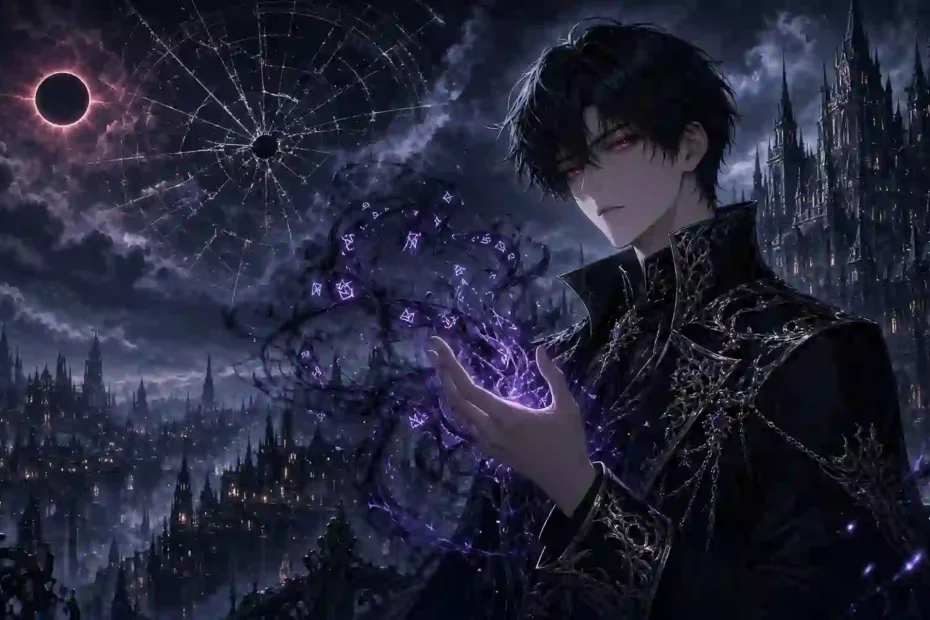
Quick answer: I Became the Genius Bastard of a Noble Dark Clan is a Korean fantasy series about a failed hero who wakes in the body of Christian van Baren Kazar, a disreputable heir of a powerful dark-magic family. He has two years before Christian’s foretold death and five years before the world’s destruction. To change both outcomes, he must understand his new family, gain power, and prevent the conflict that leads to disaster.
The hook is easy to grasp: a man who once lost everything gets a second life, but not a safe one. The story pairs the wish for wealth and comfort with a sharp deadline, family politics, magic, and the looming cost of war. This guide explains the premise, characters, setting, themes, novel and manhwa formats, and what readers should know before starting—without giving away major later turns.
Series at a glance
| Detail | Information |
|---|---|
| English title | I Became the Genius Bastard of a Noble Dark Clan; also listed in English as The Unorthodox Genius of the House of Darkness |
| Original Korean title | 암흑명가 천재 망나니가 되었다 |
| Format | Korean fantasy web novel and manhwa adaptation |
| Novel author | Yoo In (유인), according to the KakaoPage novel listing |
| Manhwa credits | Salbyeol, Glee, and Yoo In are credited on the official Korean series listing |
| Main character | Christian van Baren Kazar, commonly called Chris in summaries |
| Core genres | Fantasy, action, adventure, reincarnation, magic, and family drama |
| Central conflict | Chris must survive his personal death deadline and avert a wider catastrophe |
| Best starting point | Begin with the manhwa for visual storytelling; start with the novel if you prefer prose and a longer reading experience |
| Publication note | Chapter availability and release status can change by platform and region; check the official listing before planning a catch-up read |
The official KakaoPage and Kakao Webtoon listings provide the title, Korean synopsis, creator credits, and format information used in this table. [1][2]
What is I Became the Genius Bastard of a Noble Dark Clan about?
At the beginning, the protagonist has already paid a steep price for trying to be a hero. His life ends after hardship with a heroic party, and his final wish is modest: he wants to be born into a wealthy family next time. The wish comes true in the most inconvenient way possible. He awakens as Christian, the infamous disgrace of a rich and influential dark-magic clan.
This is not a peaceful second life. Christian is expected to meet a miserable end in two years. Beyond that personal deadline, the world faces destruction within five years. The protagonist knows that simply enjoying his new status will not keep him alive. He needs to change his position inside the family, build enough strength to influence events, and stop the chain of conflict connected to the approaching end.
The premise of I Became the Genius Bastard of a Noble Dark Clan draws tension from two clocks. One counts down to Christian’s death; the other points toward a global disaster. A decision that helps him survive in the short term may make the wider crisis worse. That gives the story more direction than a standard “reincarnated hero becomes powerful” setup.
The word “bastard” in the English title signals Christian’s reputation and contested place in the family. It does not mean the story is only about a cruel protagonist. The series asks whether someone known as a failure can make better choices when he understands what is coming—and whether intelligence alone is enough to earn trust, power, or a second chance.
Who is Christian van Baren Kazar?
Christian van Baren Kazar is the noble heir whose body the protagonist inhabits. Before the new mind takes over, Christian has a damaging reputation as a reckless, useless young master. His name opens doors, but his behavior has also created distrust. Both the advantages of an affluent home and the fallout from the previous owner’s deeds are passed down to the protagonist.
That contrast gives the lead character an immediate practical challenge. He cannot simply announce that he has changed and expect everyone to believe him. Family members and servants have memories of the old Christian. If he wants cooperation, he must show a pattern of different behavior. In a household where rank and capability matter, small choices can carry political weight.
Chris’s previous life matters, too. He was not a person who had always been powerful. He knows what it means to work hard, lose, and face death without the outcome he wanted. His new position gives him resources he once lacked, while his memories and future knowledge give him a chance to plan. The tension comes from combining those advantages with the fact that he is still trapped in a dangerous world.
Readers searching for I Became the Genius Bastard of a Noble Dark Clan often want to know whether Christian is a villain or an antihero. A fair answer is that he begins with the label of a disgraceful noble, but the new protagonist’s choices drive the character arc. The story’s appeal depends on watching him use wit, resolve, and knowledge to alter that reputation—not on assuming that the title alone tells you who he becomes.
Why does Chris have only two years to live?
The story establishes a specific fate for Christian: he is expected to meet a tragic end in about two years. That prediction gives the opening a firm deadline. It also prevents the protagonist from treating his new life as an open-ended adventure. He has limited time to learn the rules, judge whom he can trust, and gain enough influence to change the outcome.
The deadline works as more than a countdown. It forces Chris to rank his priorities. Should he focus on training, family alliances, political power, or the larger threat? What looks like a personal survival plan can affect the clan and the wider world. The choices become more interesting because the protagonist cannot do everything at once.
This time pressure is one of the distinguishing elements of I Became the Genius Bastard of a Noble Dark Clan. Many reincarnation fantasies give the lead a long runway to learn a new world. Here, he inherits a high-risk identity and a short window. The pressure encourages rapid problem-solving, but it can also create friction: plans fail, people resist change, and knowing the future does not guarantee control over it.
The two-year deadline should be understood as a premise spoiler, not a full plot reveal. The exact circumstances surrounding Christian’s fate are part of the story’s unfolding mystery. Readers who prefer to discover the details should stop at the official synopsis and avoid chapter-by-chapter summaries.
What is the five-year apocalypse threat?
Surviving the first deadline does not solve the central problem. The larger world is also moving toward destruction within five years. The protagonist’s previous experience gives him reason to fear that the coming disaster is not a vague rumor. He has seen what happens when the forces behind it are left unchecked.
That second clock expands the scale of the series. At first, Christian’s wealth and family position seem like a personal reward. In practice, they place him near the people and institutions that may shape the crisis. The protagonist must turn an inherited status into real political and military influence, even though he would rather secure a comfortable life.
In the official synopsis, the route he considers involves taking control of his dark-magic family and becoming the Demon Emperor so he can prevent a war. The exact title and translation may vary between English summaries, so readers should treat the official Korean listing as the clearest reference for the publisher’s synopsis. [1][2]
The world-ending stakes do not erase the small conflicts. Family resentment, reputation, magical training, and resource management still matter because they affect Chris’s ability to act. The story makes the large threat feel connected to the everyday choices of a young noble rather than detached from them.
How reincarnation and future knowledge shape the plot
Reincarnation gives the protagonist a second identity, while his memories create an uneven advantage. He knows more than the people around him about the direction of events, but he does not automatically know every detail or how each person will react. The gap between what he expects and what actually happens can create suspense.
His knowledge is useful in three ways:
- Planning: He can identify dangers earlier than someone encountering them for the first time.
- Prioritizing: He understands that certain events may have consequences beyond the immediate scene.
- Reframing: He can challenge the reputation and habits attached to Christian’s name.
It is also limited. A memory is not the same as full control. People make independent decisions, the protagonist’s new actions can alter outcomes, and a plan can fail when he lacks trust or power. That limitation helps keep the lead from feeling invincible.
I Became the Genius Bastard of a Noble Dark Clan uses the familiar reincarnation framework but anchors it in personal responsibility. The protagonist does not only ask, “How do I become strong?” He must also decide what to do with the opportunity he has been given. That question gives the story room for growth beyond collecting abilities or defeating one opponent after another.
What makes the dark-magic clan important?
The clan is more than a backdrop for the protagonist’s new wealth. It is the source of his name, social standing, resources, and immediate danger. Because Christian belongs to a powerful family associated with dark magic, every family relationship can affect his survival. The house offers protection, but it also has expectations, rivalries, and rules that he must learn.
A noble family is a useful setting for conflict because power is shared unevenly. An heir may possess a title but still need allies. Older relatives may control decisions. Servants may know the household better than the young master. A reputation can influence how others interpret even a sincere attempt to change. The family structure therefore creates social stakes alongside battles and magical training.
Dark magic also gives the series its visual and tonal identity. It points toward a fantasy world where power may be feared, respected, or politically valuable. The label does not by itself prove that every dark-magic character is evil. A more engaging question is how the world defines dangerous magic and who benefits from that definition.
The clan is central to I Became the Genius Bastard of a Noble Dark Clan because taking charge of it is tied to the protagonist’s plan for the wider future. He cannot stop a major war from the sidelines if he has no influence over the forces involved. Family politics become part of the world-saving plot, not a separate detour.
Is Chris a genius, a bastard, or both?
The title deliberately places “genius” beside “bastard,” two labels that pull in different directions. “Genius” promises quick thinking and exceptional potential. “Bastard” suggests social rejection, bad conduct, or an uncomfortable family position. The story’s central character is compelling because he must deal with both the person he is becoming and the reputation he has inherited.
His intelligence should not be confused with effortless mastery. A smart plan still depends on timing, information, resources, and other people. If Chris wants to change his fate, he has to do more than recognize a problem. He must persuade people, improve his abilities, and accept consequences when a strategy misfires.
The “bastard” element creates an ongoing social test. When someone has behaved badly in the past, others may distrust even a good decision. This makes redemption a matter of repeated action rather than a quick declaration. Readers can watch whether Chris’s conduct supports the new identity he wants to build.
That tension is why the series can appeal to readers who enjoy clever leads but want more than a string of easy victories. The protagonist’s advantages are real, yet his starting reputation and deadline keep the path from being entirely smooth.
Main themes: second chances, reputation, and responsibility
A second chance is not a clean slate
Chris receives another life, but he does not begin without baggage. He wakes in a body associated with a particular history. The opportunity to change is real, yet the people around him still respond to the name and actions they know. This makes the premise more grounded than a simple reset button.
Reputation can be changed through evidence
The protagonist’s reputation is part of the plot because it affects access and trust. If he wants people to follow him, he must provide evidence that he can be relied on. A visible change in behavior can matter more than a speech. This is a familiar human conflict inside a heightened fantasy setting.
Power creates duties as well as options
At first, wealth and rank look like a personal prize. Once the threat to the world becomes clear, those advantages come with responsibility. The narrative asks whether Chris will use power only to protect himself or accept a broader role in preventing harm.
Knowing the future does not remove uncertainty
Future knowledge creates a head start, not certainty. If the protagonist changes events, the expected path may shift. This allows the story to explore the pressure of making decisions without complete information.
Ambition can serve a purpose
Chris’s goal of gaining authority sounds self-interested, but the plot ties that ambition to preventing war. This creates a useful moral question: can someone pursue power for a protective reason without becoming the danger they hoped to stop? The story’s answer develops through choices and consequences.
Readers who appreciate both character development and power progression will find fodder in I Became the Genius Bastard of a Noble Dark Clan. The fantasy action supplies momentum, while questions of trust and responsibility add a personal layer.
Novel vs. manhwa: which version should you read?
The original Korean work is a web novel published on KakaoPage. The story also has a manhwa adaptation listed on Kakao’s official Korean webtoon platform. The adaptation brings the premise into full-color sequential art, while the novel uses prose to deliver its scenes and narration. The official listings distinguish the two formats and name their associated creators. [1][2]
| Reader preference | Better first choice | Why it may suit you |
|---|---|---|
| You like expressive art and fast visual pacing | Manhwa | Character designs, action, and magic appear directly on the page |
| You want prose narration and a longer-form read | Web novel | Prose can spend more time on internal thought and scene detail |
| You prefer sampling before committing | Manhwa | A few episodes can quickly show whether the visual style works for you |
| You want the broader original reading experience | Web novel | It is the source format and has its own completed-series listing on KakaoPage |
| You want to compare adaptation choices | Read both | Notice what the comic emphasizes through framing, pacing, and visual detail |
An adaptation may adjust pacing, scene order, or emphasis to fit its format. Do not assume that the novel and comic have identical chapter breaks or that one version is automatically more complete in every language or region. Check the platform’s current listing for publication status and available episodes before you start.
For a first-time reader, the manhwa is a natural entry point if visual fantasy is your preference. Choose the novel if you enjoy extended prose and want to experience the source format. If you later read both, treat them as related versions rather than expecting a scene-for-scene duplicate.
Who should read this series?
This title is likely to suit readers who enjoy:
- Reincarnation or second-life fantasy with a clear survival deadline.
- A talented protagonist who begins with a poor reputation.
- Noble-house politics, family tension, and ambitious heirs.
- Magic systems, action scenes, and progression toward greater power.
- A plot that combines personal survival with a threat to the wider world.
- Leads who use planning and persuasion as well as combat.
It may be less suitable for readers who want a quiet slice-of-life story, a low-stakes romance as the main focus, or a protagonist who never makes morally complicated decisions. The premise includes violence, dangerous magic, and the threat of war and catastrophe. Readers with specific content preferences should sample the opening chapters and review any official content information available on their reading platform.
I Became the Genius Bastard of a Noble Dark Clan also works for readers who like the “villainous young master changes his ways” setup but want a larger fantasy objective. The appeal is not only that Chris gets a privileged life. It is the mismatch between the easy comfort he imagined and the difficult work his new role demands.
How to start reading without spoilers
A spoiler-light approach can preserve the strongest parts of the setup:
- Choose one official format first. Start with the novel or the manhwa based on your preferred way to read.
- Read the platform synopsis, then begin at the first installment. Episode summaries may reveal developments the opening is designed to introduce gradually.
- Keep the two deadlines in mind. They clarify why the protagonist acts urgently, even when he appears to have wealth and status.
- Pay attention to relationships as well as abilities. Trust within the clan can be as important as raw magical strength.
- Avoid chapter-title searches if you dislike spoilers. Search snippets, fan comments, and recap headlines can reveal later turns.
- Check current release information on the publisher’s page. English chapter availability may not match the Korean release schedule.
The exact number of episodes and the release status can change over time. A guide that prints a fixed chapter total can become stale quickly, especially when different platforms update on different schedules. For that reason, this article focuses on the stable premise and recommends checking the official listing for current availability.
What makes the premise stand out among reincarnation fantasy?
Reincarnation fantasy is a broad genre, so a familiar starting point is not automatically a weakness. The details determine whether a story feels distinct. Here, the protagonist inherits a position that combines wealth with social damage, and he faces two deadlines at once. That pairing gives the first act a clear structure.
The protagonist’s desired reward is also deliberately small compared with the burden he receives. He wanted comfort after a difficult life. Instead, he gets a dangerous family name and a responsibility connected to the end of the world. That ironic mismatch creates a source of humor as well as tension.
Another distinguishing feature is the link between family authority and global stakes. Chris’s plan depends on becoming powerful within a clan, but the purpose is to prevent a much larger catastrophe. The story can therefore move between intimate household dynamics and high-stakes fantasy conflict without abandoning its central character problem.
Finally, the title tells readers to expect a contrast: genius potential inside a body known for disgrace. Whether that contrast becomes satisfying depends on the development of the character, not the premise alone. For readers comparing fantasy series, I Became the Genius Bastard of a Noble Dark Clan sits at the intersection of reincarnation, dark-magic family drama, and political power progression. A reader-friendly guide should avoid promising that every arc will land perfectly. The strongest reason to try the series is its clear setup and the way its personal and political conflicts intersect.
Common misunderstandings about the series
It is not simply a story about an evil noble. The inherited reputation is important, but the premise centers on a new protagonist trying to alter his path.
The rich-family wish does not remove danger. Wealth gives Chris useful resources, but it does not cancel his death deadline or the disaster approaching the world.
Future knowledge is not a guarantee of victory. The protagonist can make informed plans, yet people and events can resist his expectations.
The novel and manhwa are not interchangeable release lists. They are different formats with separate platform pages and potentially different availability by language or territory.
A “dark” clan is not a complete moral description. The setting uses dark magic and a sinister family image, but readers should judge characters by what they do in the story.
A search result is not always an official reading source. For accurate credits, current status, and licensed access, confirm details on the relevant publisher or platform listing.
Quick reading recommendation
If you enjoy strategic fantasy leads, start with the official manhwa and give the opening enough time to establish Christian’s reputation, the clan, and the two deadlines. If prose is your preferred format—or you want the source version—try the KakaoPage novel. Keep in mind that availability and translation options differ between markets. This is a spoiler-light recommendation, not a promise about every later arc.
The ideal reader for I Became the Genius Bastard of a Noble Dark Clan is someone who wants momentum and character development together. The central question is not only whether Chris can become strong. It is whether he can use a second life and a powerful family position to create a future that is different from the one he remembers.
Frequently asked questions
1. Is I Became the Genius Bastard of a Noble Dark Clan a manhwa or a novel?
It exists as both a Korean web novel and a manhwa adaptation. KakaoPage lists the novel, while Kakao’s Korean webtoon platform lists the comic version. The two formats offer the same broad premise through different storytelling methods.
2. Who is the main character?
The central character is Christian van Baren Kazar, often called Chris in English summaries. A protagonist from another life wakes in Christian’s body and inherits the young noble’s reputation, family position, and dangerous fate.
3. What is the story about?
A former hero is reborn as a disgraced heir of a powerful dark-magic clan. He has two years before Christian is expected to die and five years before the world faces destruction. He tries to change his personal fate and stop the larger catastrophe.
4. Is the web novel complete?
KakaoPage’s official Korean novel listing marks the novel as complete. The manhwa is a separate adaptation with its own release schedule. Availability, translations, and episode counts can vary, so check the relevant official platform for the latest listing. [2]
5. Does the manhwa follow the novel exactly?
It adapts the same underlying story, but the formats are not identical reading experiences. A comic can change pacing and emphasis to suit visual storytelling. Readers should expect related versions rather than a guaranteed scene-by-scene match.
6. Is this series suitable for readers who dislike spoilers?
Yes, if you begin with the official synopsis and opening installment rather than detailed recaps. The premise itself includes the two-year and five-year deadlines, but later outcomes are best discovered in the story. Avoid searches for specific chapter summaries if you want to stay spoiler-free.
Final thoughts: should you try it?
I Became the Genius Bastard of a Noble Dark Clan offers a direct, high-stakes fantasy hook: a former hero receives the privileged life he once wanted, only to discover that his new identity is marked for death and tied to a coming apocalypse. Christian’s challenge is to turn an inherited name into a different future. That means learning the rules of his family, earning influence, and deciding what kind of person he wants to become.
If you like reincarnation fantasy, ambitious noble families, dark magic, and protagonists who must think as well as fight, sample the opening on an official platform. Then decide whether the novel’s prose or the manhwa’s visual storytelling is the better fit for you. Share your spoiler-free first impression or recommend a similar fantasy series to other readers—thoughtful reader discussion helps new fans find stories they will genuinely enjoy.