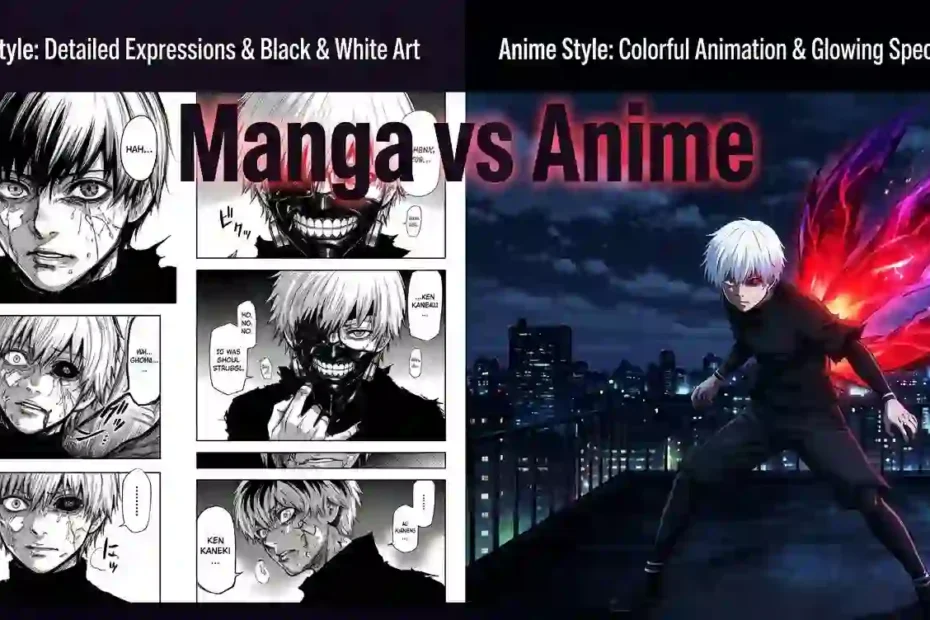
The Tokyo fandom has witnessed one of the most debated adaptations in modern anime history. When Sui Ishida’s dark fantasy manga leapt from page to screen, audiences expected faithful translation—but what they received was a fragmented experience riddled with controversial changes. The tokyo ghoul manga vs anime differences extend far beyond simple censorship; they encompass narrative restructuring, character arc alterations, and fundamental storytelling philosophy shifts that continue to divide the community years later.
The Core Story Divergence
From its very first episode, the anime adaptation charted its own course. While the Tokyo Ghoul manga established its narrative rhythm deliberately, the anime compresses, expands, and occasionally completely reimagines key plot points. The original manga, serialized in Weekly Young Jump, offered readers a measured pace that allowed for deep world-building and character introspection. In contrast, the Tokyo Ghoul anime, produced by Studio Pierrot, faced strict runtime constraints that forced difficult decisions about what to keep, what to cut, and what to rewrite entirely.
The most striking aspect of the tokyo ghoul manga vs anime differences lies in narrative completeness. The manga provides a cohesive, author-approved conclusion that ties together every introduced plot thread. The anime, however, particularly in its second season Tokyo Ghoul √A and subsequent Tokyo Ghoul:re seasons, diverged so significantly that many manga readers consider it a separate entity altogether. This divergence didn’t happen by accident—studio decisions, creator intentions, and production timelines all played roles in shaping what viewers ultimately experienced.
Pacing and Narrative Structure
Pacing represents perhaps the most fundamental difference between these two mediums. The Tokyo Ghoul manga unfolds at a deliberate pace that allows suspense to build naturally. Readers spend time with characters, understand their motivations, and feel the weight of each ghoul-human conflict. The Tokyo Ghoul anime, by necessity, compresses multi-chapter story arcs into single episodes or removes them entirely. This compression creates a faster viewing experience but often sacrifices the emotional resonance that makes the story impactful.
Consider the Anteiku sections: in the manga, these chapters explore the daily life of the coffee shop, the relationships between staff, and the philosophical questions about what it means to be human versus ghoul. The anime condenses these moments, focusing instead on action sequences that, while visually impressive, lack the nuanced character development present in the source material. This pacing difference fundamentally changes how audiences connect with the story—readers experience a slow-burn psychological drama, while viewers receive a supernatural action series with psychological elements.
Table: Tokyo Ghoul Manga vs Anime Comparison
| Aspect | Manga | Anime |
|---|---|---|
| Pacing | Deliberate, chapter-by-character development | Compressed, episode-focused |
| Character Depth | Extensive backstory for major and minor characters | Reduced focus on supporting cast |
| Narrative Completeness | Author-approved cohesive conclusion | Divergent, especially from season 2 |
| Kaneki’s Arc | Gradual, earned transformation across 170+ chapters | Abrupt changes, especially in √A and :re |
| Rize’s Role | Complex antagonist with full backstory | Simplified, primarily plot device |
| Hide’s Fate | Significant role throughout series, varied outcome | Differing treatments across seasons |
| Aogiri Tree | Explored as complex organization | Simplified villainous force |
| Thematic Depth | Moral ambiguity, philosophical exploration | Action-focused with simplified themes |
| Production Timeline | Author-controlled, complete story | Studio constraints, runtime limitations |
| Continuity | Consistent throughout all media | Compounding divergences from season 2 |
Character Development Differences
Character arcs suffer the most from adaptation changes. The Tokyo Ghoul manga presents Ken Kaneki as a character who undergoes gradual, earned transformation. His journey from timid college student to one-eyed ghoul leader feels organic because the manga devotes substantial page time to his internal struggles, doubts, and growth. The anime, particularly in its early seasons, rushes many of these transformations, sometimes making character shifts feel unearned or abrupt.
The tokyo ghoul manga vs anime differences become most apparent in supporting characters. Take Rize Kamishiro, the catalyst for Kaneki’s transformation. In the manga, Rize appears as a more complex antagonist with her own agency and motivations beyond simply pushing the plot forward. The anime simplifies her role, making her more of a plot device than a fully realized character. Similarly, characters like Touka Kirishima, Nishioka, and even antagonist figures like Jason receive more backstory and motivation in the manga than their anime counterparts.
The manga also excels at giving side characters meaningful arcs. Characters like Kanae von Rosewald, Yomo, and even secondary doves like Horouchi receive substantial development that enriches the overall narrative. The anime, constrained by episode counts, often reduces these characters to plot functions rather than fully realized individuals with their own desires, fears, and growth trajectories.
Kaneki’s Transformation Journey
Perhaps no character illustrates the tokyo ghoul manga vs anime differences more clearly than Ken Kaneki himself. In the manga, Kaneki’s transformation unfolds across hundreds of chapters, each stage of his evolution carefully earned. He begins as an ordinary student, survives a brutal attack, receives Rize’s organs, struggles with his new identity, joins Anteiku, leaves, joins Aogiri, recovers, becomes the One-Eye King, and finally confronts the series’ central conflicts—all with substantial character development at each stage.
The anime condenses many of these stages. Season 1 covers the early portion of the manga, but Season 2 (Tokyo Ghoul √A) takes a completely original turn that Sui Ishida himself helped develop but that significantly deviates from his manga narrative. The anime’s Kaneki becomes more emotionally volatile and less internally consistent than his manga counterpart. His hair turning white, his ghoul powers awakening, and his philosophical shifts all occur on different timelines and with different triggers than the manga version.
By the time Tokyo Ghoul:re arrives, the anime Kaneki (now operating as Haise Suzuki) has a completely different backstory and set of experiences than the manga’s Haise. This creates a situation where anime-only viewers experience a fundamentally different character journey than manga readers, contributing to the widespread perception that the anime adaptation fails to capture the essence of Ishida’s creation.
Rize’s Role and Fate
Rize Kamishiro’s character treatment exemplifies how the tokyo ghoul manga vs anime differences affect even the foundational elements of the story. In the manga, Rize emerges as more than just the inciting incident. Her backstory, her relationships with other ghouls, her philosophies about humanity and ghoul existence, and her ultimate fate all receive substantial exploration. Readers understand why Rize matters beyond her role in Kaneki’s creation.
The anime, particularly in Season 1, presents Rize more ambiguously. Her background remains largely mysterious, her screen time limited, and her ultimate fate unclear until much later seasons. Even when the anime addresses her fate, the explanations feel rushed and lack the philosophical depth present in the manga. This simplification reduces one of the series’ most intriguing characters to merely a plot mechanism, disappointing fans who appreciate Ishida’s character work.
Hide’s Storyline Variations
Hideyoshi Nagachika, Kaneki’s best friend and moral compass, represents another area where the adaptations diverge significantly. In the Tokyo Ghoul manga, Hide’s role evolves throughout the series. He becomes increasingly involved with the CCG, witnesses Kaneki’s transformations, and his own fate becomes intertwined with the series’ central conflicts in ways that feel organic to the story’s progression.
The anime treatment of Hide varies dramatically across seasons. Early seasons portray him as comic relief and Kaneki’s grounded humanity. Later seasons, particularly Tokyo Ghoul:re, handle his fate in ways that differ completely from the manga, creating confusion and dissatisfaction among viewers who then read the source material. These variations aren’t merely cosmetic—they affect themes of friendship, loyalty, and what it means to remain human in inhuman circumstances.
Supporting Cast Changes
The tokyo ghoul manga vs anime differences extend to nearly every named character in the series. The CCG (Commission of Counter-Ghoul) investigators receive more backstory and motivation in the manga. Characters like Kijima, Mado, and Amo have chapters dedicated to their perspectives, their motivations, and their own struggles with the ghoul-human conflict. The anime, by necessity, reduces many of these characters to antagonist roles without the same depth.
Aogiri Tree, the series’ primary ghoul organization, receives similar treatment. The manga explores Aogiri’s internal structure, its leadership, its philosophy, and its relationships with other factions. The anime presents Aogiri as primarily a villainous force without the same organizational complexity. This simplification affects how viewers understand the series’ central conflict—it becomes good versus evil rather than the more nuanced moral landscape Ishida created.
Arc and Episode Adaptations
Specific story arcs demonstrate the tokyo ghoul manga vs anime differences most clearly when examined individually. The Mado-Amon investigation arc, for instance, receives substantial backstory development in the manga that informs both characters’ motivations throughout the series. The anime condenses this into a more straightforward rivalry, losing the psychological complexity that makes their eventual confrontation meaningful.
The Tsukiyama Rescue arc illustrates another significant difference. In the manga, this arc serves as a turning point for several characters, explores Kaneki’s growing power and the consequences of its use, and develops relationships between characters who would become important later. The anime adapts the basic plot points but strips away much of the character development and thematic resonance, turning what should be a complex emotional story into primarily an action sequence.
The operation rushima arc, exclusive to the Tokyo Ghoul:re anime seasons, presents the most controversial adaptation differences. The manga provides extensive buildup, character perspectives, and strategic explanations for this complex operation. The anime condenses or completely omits many elements, leaving viewers confused about motivations, alliances, and the operation’s significance to the overall narrative. This pattern repeats throughout the :re anime seasons, with each episode seeming to require manga readers to explain what’s happening to anime-only viewers.
Tokyo Ghoul: Re Anime vs Manga
The Tokyo Ghoul:re sequel series presents perhaps the most significant tokyo ghoul manga vs anime differences of all. The manga continuation, written after Ishida completed his original story, weaves together threads from the original with new characters, new organizations, and a narrative structure that reflects the author’s evolved storytelling approach. The anime adaptations of :re, however, faced challenges stemming from the √A season’s divergences, creating continuity issues that plagued the animated version from its outset.
The manga :re explores themes of legacy, what characters have become after the original story’s events, and how the world has changed. It introduces new protagonists while continuing stories of fan-favorite characters from the original. The anime :re, constrained by needing to adapt a story significantly altered by √A’s changes, struggles with pacing, character motivations, and narrative coherence. Many manga readers consider the anime :re a shadow of what the source material achieved.
Art and Visual Style Differences
Beyond narrative and character, the tokyo ghoul manga vs anime differences include aesthetic considerations. Sui Ishida’s art style, while occasionally crude in early chapters, possesses a distinctive line work, shading technique, and panel composition that creates a specific mood. The black and white manga format allows for deliberate use of contrast, shadow, and visual pacing that color anime cannot replicate exactly.
The anime adaptation brings color, voice acting, music, and motion to the story—enhancements the manga cannot offer. However, certain visual choices in the anime, particularly regarding ghoul kagune design, quinque appearances, and the portrayal of gruesome content, sometimes differ from Ishida’s original visions. Studio Pierrot’s animation style, while polished, sometimes prioritizes spectacle over the more grounded, gritty aesthetic that characterizes the manga.
Which Is Better: Manga or Anime?
This question plagues the fandom, and the answer depends on what readers seek. The manga offers: complete narrative architecture, thorough character development, author-approved pacing, and a satisfying conclusion that resolves introduced plot threads. For readers who value story depth, character psychology, and thematic richness, the manga provides the superior experience.
The anime offers: immediate accessibility, auditory and visual elements that bring the world to life, musical scores that enhance key moments, and a starting point for newcomers who might never read the manga. The first season of the anime, in particular, captures some of the manga’s essence remarkably well, and certain musical moments (like the opening and ending themes) become iconic in their own right.
Most consensus acknowledges that while the anime can introduce audiences to the Tokyo Ghoul world, the manga represents Ishida’s complete vision. The tokyo ghoul manga vs anime differences ultimately matter because they represent different artistic choices, production constraints, and creative priorities—but the manga’s comprehensive storytelling consistently receives higher praise from those who experience both.
Conclusion: Making an Informed Choice
Understanding the tokyo ghoul manga vs anime differences helps fans and newcomers alike make informed decisions about how to experience this story. Neither medium is inherently superior—each offers different strengths and weaknesses. However, those seeking the complete, author-intended experience will find the manga provides what the anime, despite its merits, cannot fully replicate.
For those beginning their Tokyo Ghoul journey, consider starting with the manga for the full experience, or watching the first season of the anime while keeping in mind its limitations. For dedicated fans, revisiting the manga after anime viewing often reveals layers of depth and nuance previously missed. The story of Ken Kaneki, the world of ghouls and investigators, and the philosophical questions about humanity continue to resonate regardless of medium—but the manga offers the richest, most complete expression of Sui Ishida’s creative vision.
Your Turn: Have you experienced both the Tokyo Ghoul manga and anime? Which distinctions caught your attention the most? Did the anime’s changes enhance or diminish your appreciation of the story? Share your thoughts in the comments below, and let’s discuss how these adaptations compare in your experience.
Frequently Asked Questions
What are the main differences between Tokyo Ghoul manga and anime?
The tokyo ghoul manga vs anime differences primarily stem from runtime constraints forcing the anime to compress or omit substantial manga content. The manga offers deeper character development, more detailed world-building, and author-approved pacing throughout all story arcs. Specific differences include altered character motivations, omitted storylines like the Rushima operation, changed event orderings, and—most notably—the second season Tokyo Ghoul √A becoming a completely original story rather than a manga adaptation. The manga provides a cohesive narrative with every plot thread resolved, while the anime, particularly from season two onward, diverges significantly, creating continuity issues especially in the :re seasons.
Why does the Tokyo Ghoul anime have a different ending?
The Tokyo Ghoul anime ending differences result from multiple factors. First, the manga creator Sui Ishida wanted the anime second season (√A) to be an alternative storyline, giving readers a different perspective on characters before the :re sequel. Second, the manga wasn’t complete when the anime began production, forcing original story decisions. Third, studio decisions, production timelines, and the desire to create merchandisable moments all influenced adaptation choices. The anime’s rushed conclusion in :re seasons stems from these early deviations compounding throughout the series, ultimately requiring the anime to adapt a story significantly altered from Ishida’s original narrative.
How does Kaneki’s character differ between manga and anime?
Kankei’s manga versus anime character arc differs fundamentally in pacing, motivation, and consistency. The manga Kaneki undergoes gradual, earned transformation across hundreds of chapters, with each power increase, philosophical shift, and identity crisis carefully developed. His journey from reluctant ghoul to One-Ece King feels organic because readers experience each stage’s emotional weight. The anime Kaneki, particularly in √A and :re, experiences more abrupt changes, sometimes appearing emotionally inconsistent with previously established traits. His hair turning white, power awakening, and philosophical shifts all occur on different timelines and with different triggers than the manga version, making the anime character feel like a different person at times.
What happens to Hide in the manga vs anime?
Hide’s fate varies dramatically between adaptations. In the Tokyo Ghoul manga, Hide remains alive much longer, becomes increasingly involved with the CCG, witnesses Kaneki’s transformations, and his fate ties thematically to the series’ central questions about humanity. The anime, particularly in later seasons, handles Hide’s storyline differently, with some seasons suggesting his death earlier than the manga and others completely reimagining his role. These variations aren’t merely plot points—they affect the series’ core themes about friendship, loyalty, and what it means to remain human when those you care about transform beyond recognition.
Why was Tokyo Ghoul:re anime so different from the manga?
The Tokyo Ghoul:re anime differences stem from compounding adaptation choices made in earlier seasons. The √A season’s complete original storyline created a narrative divergence that the :re anime had to adapt, creating continuity issues. The manga :re, written after Ishida completed his story, contains coherent character arcs, resolved plot threads, and thematic consistency that the anime couldn’t replicate given its narrative foundation. Additionally, anime production constraints, episode counts, and the need to animate rather than illustrate all forced condensation decisions that stripped away the manga’s depth, complexity, and satisfying resolution of introduced story elements.
Is the Tokyo Ghoul manga really better than the anime?
For audiences valuing narrative completeness, character depth, and author-intended storytelling, yes—the manga generally surpasses the anime adaptation. The tokyo ghoul manga vs anime differences favor the manga in character development, plot coherence, thematic resonance, and satisfying conclusion. However, the anime excels in auditory experience, visual spectacle, musical score, and immediate accessibility. The first anime season particularly captures some manga essence well. Ultimately, the “better” experience depends on personal preferences: readers seeking depth choose the manga; viewers wanting immediate audiovisual engagement may appreciate the anime—ideally while understanding its limitations and supplementing with the source material.
Which Tokyo Ghoul anime season adapts the manga most faithfully?
Tokyo Ghoul Season 1 adapts the manga most faithfully, covering the early narrative with reasonable accuracy regarding major plot points, character introductions, and tone. However, even Season 1 makes some condensations and minor changes. Seasons 2 (√A) and later completely diverge from the manga source material. The √A season was always intended as an alternative storyline with Ishida’s involvement, and subsequent :re anime seasons adapt a story significantly altered by these early deviations. For the most faithful experience, Season 1 provides the closest approximation, but even this contains the compression and condensation inherent in adapting a long-form manga to television format.
What specific manga arcs were omitted from the anime?
Several significant manga arcs were omitted or substantially condensed in the Tokyo Ghoul anime adaptation. These include extensive portions of the :re sequel storyline, the full operation rushima arc, many character backstory chapters (for investigators like Mado and Amo, and ghouls like Yomo and Tsukiyama), the detailed Aogiri Tree organizational structure explorations, and numerous character development moments that would have extended runtime beyond feasible limits. The anime prioritizes major fight sequences and plot-advancing moments, often at the expense of the nuanced character work, philosophical exploration, and world-building that characterize the manga’s 170+ chapters.
How should newcomers experience Tokyo Ghoul?
Newcomers should consider their priorities when choosing how to experience Tokyo Ghoul. Those wanting the complete, author-intended narrative with full character arcs and satisfying resolution should start with the manga—volumes 1-14 cover the story adaptated in anime Season 1, and reading those plus volumes 15+ provides the full experience. Those preferring immediate audio-visual engagement might start with anime Season 1, then supplement with manga reading to fill gaps and access the complete story. The most recommended approach: watch anime Season 1 for introduction and atmosphere, then read the manga from chapter 1 for the complete narrative. This provides both the audiovisual entry point and the comprehensive story experience that honors Ishida’s creative vision.